Hoping AI will give you more work-life balance in 2026? Fortune 500 CEOs warn otherwise | Fortune
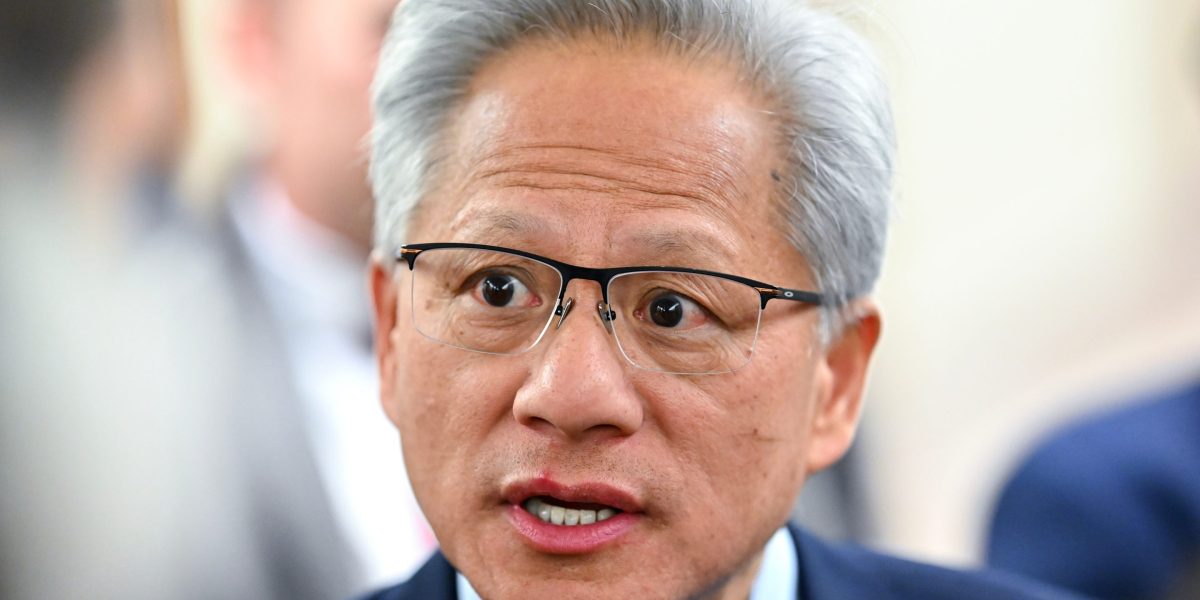
Workers may be hoping that AI can finally take over their drudge work in the new year-ease their loads and shorten the workweek, or at least make more space for life outside the office. And it’s something young people in particular are eager to have: 74% of Gen Z rank work-life balance as a top consideration when choosing a job in 2025-the highest of any generation-according to Randstad. And in the more than 20 years of producing its Workmonitor report, it’s the first time work-life balance outranked pay as the top factor for all workers. But as AI has reshaped corporate structures and enhanced productivity levels, many executive leaders are working harder than ever-and expecting everyone else to follow. From pushing return to office mandates to praising around-the-clock availability, CEOs are modeling a culture where the lines between work and life blur. Nvidia’s CEO Jensen Huang, for example, said he worked seven days a week this year-including holidays. Zoom’s CEO Eric Yuan conceded simply: “work is life.” And looking toward 2026, it’s unclear whether dreams of work-life balance will come true. Nvidia CEO Jensen Huang As the leader of the world’s most valuable company, Nvidia CEO Jensen Huang has a lot on his mind. Relaxation, however, does not appear to be part of the plan. His work schedule is nothing short of rigorous-beginginng from from the moment he wakes up until he’s back on the pillow-seven days a week, including holidays. It’s a grind fueled not only by the intensity of the AI race, but by a lingering fear of what happens if he ever lets up. “You know the phrase ’30 days from going out of business,’ I’ve used for 33 years,” Huang said on an episode of The Joe Rogan Experience released in December. “But the feeling doesn’t change. The sense of vulnerability, the sense of uncertainty, the sense of insecurity-it doesn’t leave you.” That mindset extends beyond Huang himself. His two children, who both work at Nvidia, follow in his footsteps and work every day for the semiconductor giant. For the Huang family, work isn’t just a job-it’s a way of life. Zoom CEO Eric Yuan Video communications giant Zoom has had one of the biggest indirect impacts on the work-life balance debate, thanks to making it possible for workers to log on from the comfort of a bed, beach, or anywhere in between. However, the journey to scaling the company to over $25 billion in market capital has revealed to Zoom CEO Eric Yuan that work-life balance is a farce. “I tell our team, ‘Guys, you know, there’s no way to balance. Work is life, life is work,’” Yuan said in an interview with the Grit podcast over the summer. Yuan even admitted that he doesn’t have hobbies, with everything he does dedicated to “family and Zoom.” However, when there’s a clash and he has to choose between the two, the 55-year-old gives life some slack: “Whenever there’s a conflict, guess what? Family first. That’s it.”...
Preview: ~500 words
Continue reading at Fortune
Read Full Article