Scientists Found a Way to Make Crops Unappetizing to Locusts
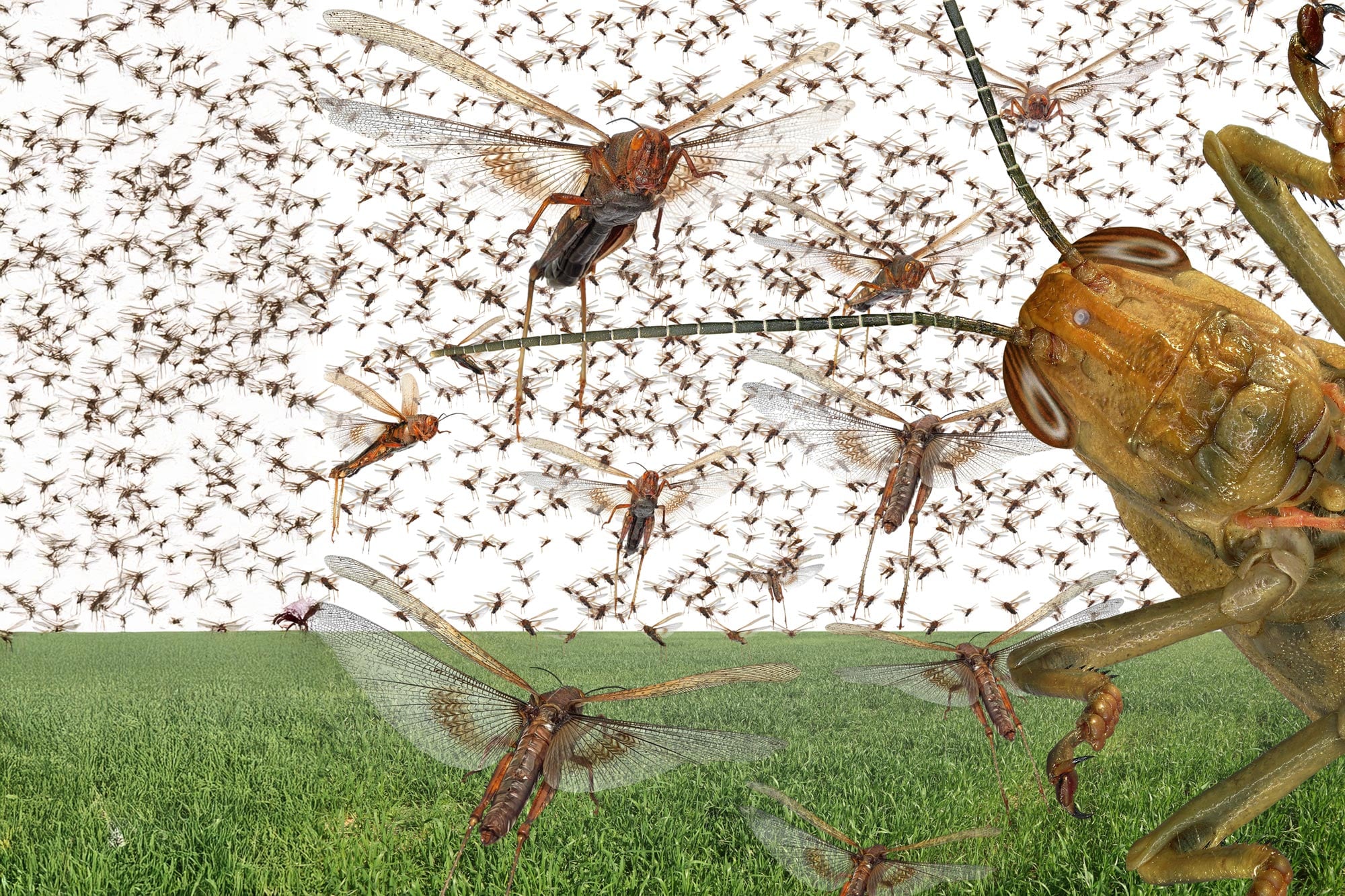
Healthier soil can stop locusts before they start eating. In Senegal, nitrogen-rich crops kept locust numbers down and doubled harvests, offering a sustainable alternative to pesticides. Credit: Shutterstock Arizona State University PhD student Sydney Millerwise holds a migratory locust in ASU’s Global Locust Initiative lab. A new study by an ASU team and international collaborators identifies a strategy to manage locust populations and prevent damage to crops. Credit: Quinton Kendall/ASU Knowledge Enterprises “All locusts are grasshoppers, but not all grasshoppers are locusts,” says Cease, an associate professor with the ASU School of Sustainability in the College of Global Futures. A locust in a “solitarious” phase is shy. It acts like a regular grasshopper: avoiding others of its kind, appearing a camouflage green and staying in one area. A locust in a “gregarious” phase is just the opposite — it gathers with other locusts, wears bright colors to stand out and migrates huge distances in search of food. Here, gregarious locusts gather inside their enclosure in the Global Locust Initiative lab at Arizona State University. Credit: Quinton Kendall/ASU Knowledge Enterprise Arianne Cease (left) served as the principal investigator of this USAID-supported project, and Associate Professor Mamour Touré (right) of Université Gaston Berger in Saint-Louis, Senegal, was the lead author of the study. Credit: Arianne Cease/Global Locust Initiative Like a werewolf exposed to moonlight, a locust is a grasshopper with the potential to completely transform under the right conditions. Out of approximately 6,800 described species of short-horned grasshoppers, only 19 are considered locusts. Over 15 years of studying locusts, Associate Professor Arianne Cease with the ASU School of Sustainability, discovered that plants growing in nutrient-poor soil promote locust outbreaks. These plants are high in carbs and low in protein. A key goal of her research is to improve sustainable ecosystem management and rural livelihoods. Credit: Quinton Kendall/ASU Knowledge Enterprise An ASU and international research team partnered with 100 farmers from two villages in Senegal for the study. Farmers grew two plots of millet — one treated with nitrogen fertilizer and one untreated. Here, a Senegalese farmer works in the field during the experiment. Credit: Arianna Cease A Senegalese farmer and study participant inspects ripening millet in a field. Credit: Marion Le Gall A participating Senegalese farmer shows his field with improved soil from composting. Composting is also the focus of ongoing research by the science team. Credit: Arianne Cease By changing what crops eat, scientists found a way to make locusts lose their appetite-and save harvests. “They’re very destructive when there’s a lot of them, but one-on-one, what’s not to love?” says Arianne Cease. She is talking about locusts. Cease directs Arizona State University’s Global Locust Initiative , where she studies how these insects behave and how to reduce the damage they cause. While her work focuses on controlling locust swarms, she also holds a deep respect for the species she studies. A Global Threat That Still Hits Hard Locust swarms often bring to mind stories of biblical disasters, but they remain...
Preview: ~500 words
Continue reading at Scitechdaily
Read Full Article