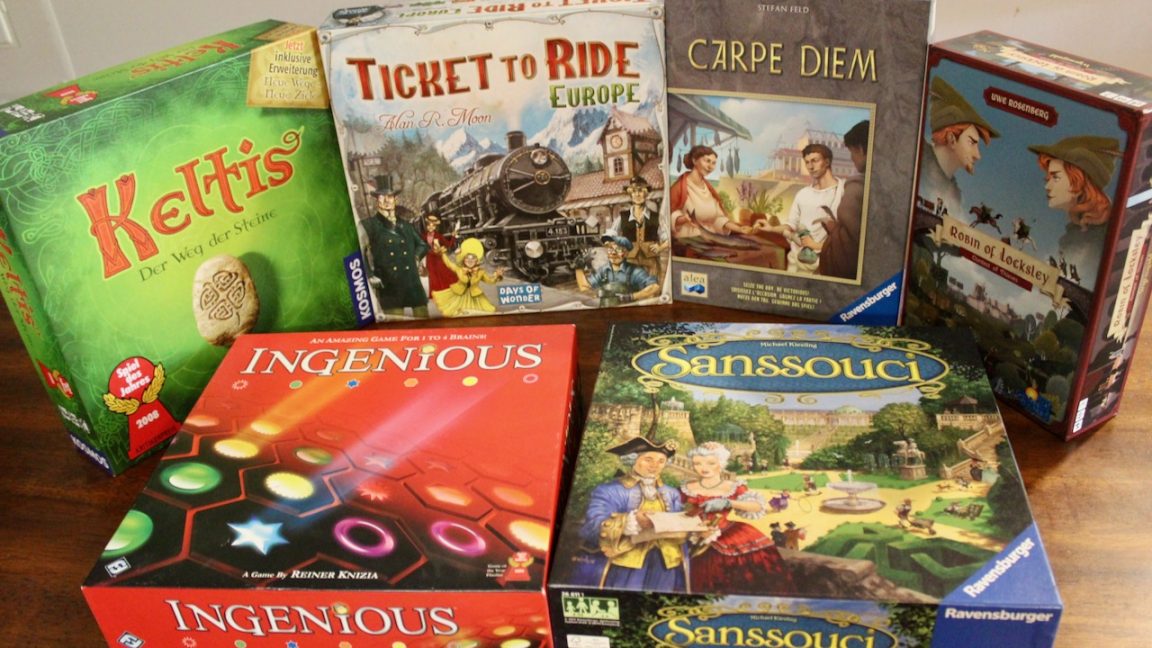
6 board games I’m playing during the pandemic
cardboard.arstechnica.com . What’s keeping me grounded in our current pandemic? Board games, for one. But I’m not reaching for the latest and the greatest at the moment; I’ve found myself reaching for shorter titles that don’t melt my brain, and I’ve been digging deeper into my collection for those criminally underplayed treasures. In part that’s because I’ve been playing with family rather than a gaming group, but-and perhaps you know the feeling-it’s also because I can’t concentrate on a two-hour strategy fest when the world feels like it’s on fire. I’ve enjoyed digging up some older titles during this time, and I’ve been reminded of how terrific some of them are. When I played Sanssouci with my 13-year old daughter, for instance, we had such a blast that we immediately played it again. And Keltis -what a gorgeous presentation, even if you do have to order it direct from Germany and download an English rules translation from BoardGameGeek . Anyway, here are six titles that I’ve been playing at home over the last couple of months. Hopefully they inspire you to get some gaming in-and to share your own quarantine board games in the comments. Keltis 2-4 players, 30 minutes, ages 8+, $33 on Amazon (with ruinous shipping) The delightful aesthetics-there’s just so much glorious green !-elevate the solid gameplay, while a second map on the back side of the board offers a thinkier experience. If you’ve played Lost Cities , you’ll grok the gameplay right away: play one card per turn, building up piles that can only move in a single direction (each card must be higher or lower than the one before). Whatever color you play conditions the piece you can advance on the board. But don’t start too many pieces down their respective paths-moving only a few spots or less results in negative points. Mix in some very light set collection and you have a terrific way to spend 45 minutes. I’m not alone in this opinion; Keltis won the prestigious Spiel des Jahres prize in Germany back in 2008.
Preview: ~343 words
Continue reading at Arstechnica
Read Full Article