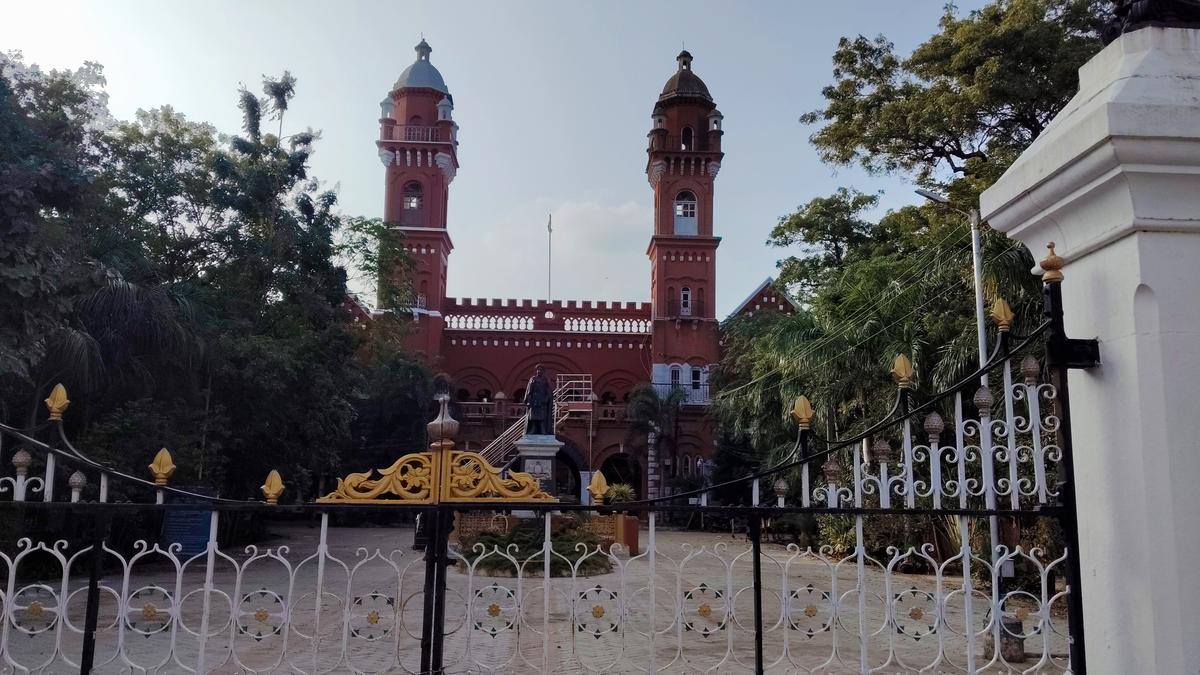
Pudukkottai SC/ST Special Court functioning without a permanent judge
For the past seven years, the Special Court in Pudukkottai designated to try cases under the Scheduled Castes and Scheduled Tribes (Prevention of Atrocities) Act has been functioning without a permanent judge, severely affecting the trial of caste-based violence cases, advocates and activists have said. The Special Court was established in early 2018 and briefly had a permanent judge before the post fell vacant following a transfer. Since then, the court has been functioning under in-charge judges, even as court staff, a public prosecutor, and other support personnel remain in place. The prolonged vacancy has come into focus amid delays in high-profile cases, including the Vengaivayal incident of December 26, 2022, in which human faece was found mixed in the drinking water tank of a Scheduled Caste settlement. Though the case was registered promptly, it was transferred to the CB-CID on January 14, 2023, and the investigation - involving DNA profiling and voice sample analysis - required repeated approvals from the special court, which was being handled by in-charge judges, causing delays. Earlier this year, the case was moved to the Judicial Magistrate-II court in Pudukkottai after provisions of the SC/ST (Prevention of Atrocities) Act were dropped. The matter remains sub judice . Pudukkottai district has witnessed several serious instances of caste-based violence over the years, ranging from the practice of the “two tumbler system” to violent attacks on Scheduled Caste habitations. These recurring incidents had even prompted Viduthalai Chiruthaigal Katchi (VCK) leader Thol. Thirumavalavan to describe the district as a ‘atrocity-prone district’, demanding focused legal and administrative intervention. However, the very court meant to deal with such cases continues to function without a dedicated judge. S. Malarmannan, joint secretary of the Pudukkottai Bar Association, who represents the Scheduled Castes in the Vengaivayal case, said the absence of a permanent judge had severely weakened the delivery of justice under the SC/ST (PoA) Act. Adjournments galore “When a Special Judge is appointed, there are clear disposal targets fixed by the High Court. That accountability ensures cases move forward. But when the court is handled by an in-charge judge, hearings are frequently adjourned and cases stagnate,” he said. Nearly 300 cases under the SC/ST (PoA) Act are pending in the district. “With a dedicated judge, at least 100 cases can be disposed of without much difficulty,” he added. Mr. Malarmannan pointed out that the responsibility of the Special Court has shifted repeatedly in recent years. “Last year, the Family Court judge held charge. The year before, it was the Mahila Court judge. At present, the Additional District Judge handling Economic Offences and NDPS cases is also in charge of the SC/ST court. This constant rotation affects continuity and depth,” he said. “A dedicated judge would be familiar with evolving jurisprudence of the act, relevant High Court and Supreme Court rulings, and the social sensitivity these cases demand,” he said. Ramesh S., secretary of the Pudukkottai District Bar Association, said judicial vacancies had reached alarming levels. “This is not limited to Pudukkottai. Across...
Preview: ~500 words
Continue reading at Thehindu
Read Full Article