Israel Announces $110 Billion Plan to Build Independent Arms Industry — ‘Reduce Dependency on Allies’
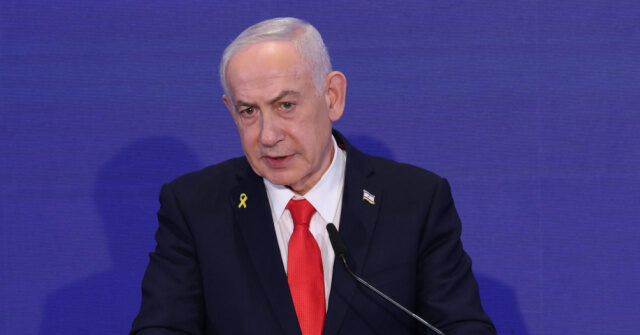
Israeli Prime Minister Benjamin Netanyahu announced Wednesday that Israel will invest roughly $110 billion over the next decade to build an independent domestic arms industry, declaring that the Jewish state must “reduce the dependency on any party, including allies,” after repeated weapons restrictions imposed during wartime. ABIR SULTAN / POOL / AFP via Getty Images Speaking at a graduation ceremony for Israeli Air Force pilots, Netanyahu said he approved, together with the defense and finance ministers, a NIS 350 billion (about $110 billion) multi-year plan aimed at ensuring Israel can arm itself independently while maintaining its battlefield edge. “We will continue to acquire essential supplies while independently arming ourselves,” Netanyahu said. “I don’t know if a country can be completely independent, but we will strive to ensure our arms are produced as much as possible in Israel.” “Our goal,” he added, “is to build an independent arms industry for the State of Israel and reduce the dependency on any party, including allies.” The announcement, made Wednesday, marks one of the largest defense-industrial investments in Israel’s history and reflects lessons drawn from more than two years of war on multiple fronts, during which Israel faced mounting political pressure and arms restrictions from abroad. Netanyahu’s remarks build on comments he made last month rejecting reports that Israel is seeking a new long-term U.S. military aid framework, saying his “direction is the exact opposite” and that Israel is moving toward “greater independence,” including in arms production. Netanyahu said the initiative would span munitions, weapons systems, and select aerial platforms, emphasizing that Israel’s defense engineers and companies are already developing systems designed to guarantee long-term military superiority. While Israel continues to rely on the United States for key platforms such as fighter jets, refuelers, and helicopters, it also maintains a robust domestic defense sector, including firms that produce unmanned aerial systems and advanced munitions. The prime minister’s comments came after several allies imposed or threatened restrictions on arms sales to Israel during the Gaza war, including temporary limitations from the United States under the Biden administration, as well as measures by European governments. Spain approved a sweeping arms embargo on Israel, while Prime Minister Pedro Sánchez accused Israel of committing “genocide” in Gaza - even as Spanish trade data later showed continued purchases of Israeli weapons systems. Other governments, including Australia, publicly criticized Israel’s conduct while quietly defending their continued use of Israeli military technology. The shift comes just days after Sen. Lindsey Graham argued Sunday that American military aid to Israel delivers “tenfold” returns to U.S. security, intelligence, and defense innovation - underscoring the tension between strategic partnership and wartime dependency. Netanyahu has increasingly framed those developments as a strategic warning. In September, he sparked political and market backlash when he said Israel may need to become a self-reliant “super-Sparta” amid growing global pressure - remarks he later clarified as referring specifically to the defense sector, not the broader economy. “There is one area where political, not economic, limitations exist - and that...
Preview: ~500 words
Continue reading at Feedburner
Read Full Article