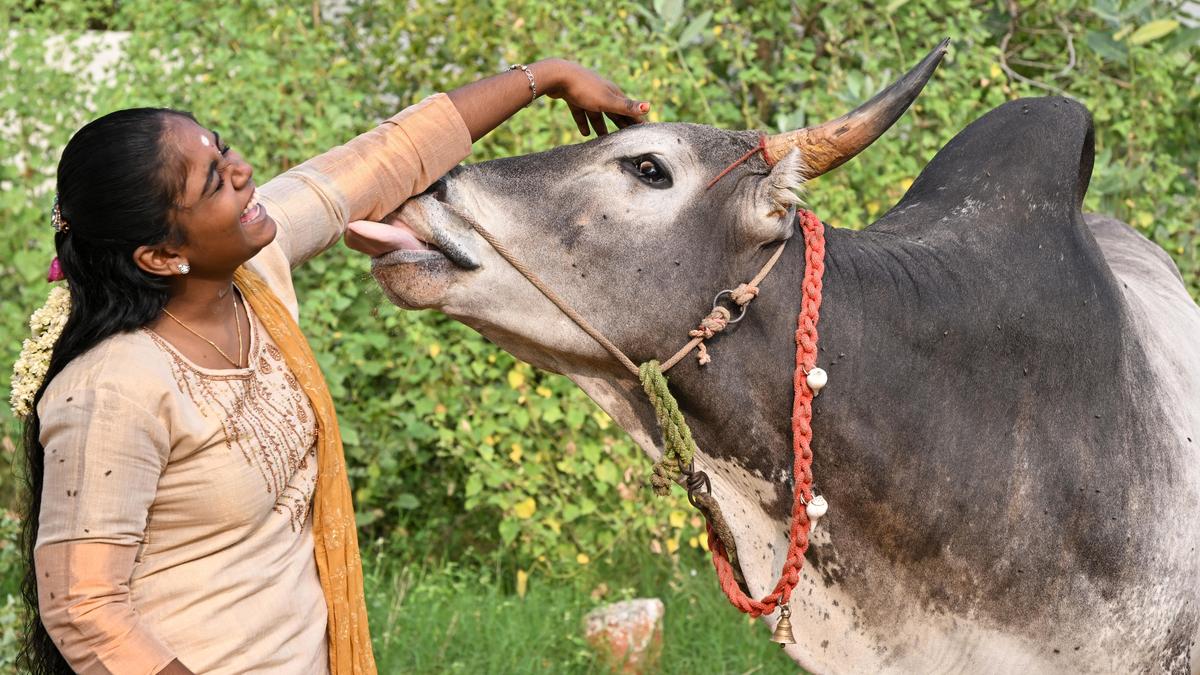
Training of bulls begins weeks ahead of Jallikattu in Madurai
On a quiet morning in Avaniyapuram on the outskirts of Madurai, two Jallikattu bulls - Elder Style and Younger Style - are led out of their shed for their daily routine. Walking alongside them is M. Alagu Petchi, a 15-year-old school-going girl who assists in their training, calling them by name and gently patting their necks. Alagu Murugan, father of Alagu Petchi, with long experience in rearing bulls since his childhood, said the elder bull is five years old and has been participating in Jallikattu events for about four years, whereas the younger, four-year-old bull has been taking part in Jallikattu for the last three years. Both the bulls, he said, have won prizes at several events, including gold coins, an almirah and household utensils. Regarding the bulls’ breed and how they were bought, Mr. Murugan said both bulls are brothers and belong to the ‘Keda Maadu’, also known locally as the ‘Kizhakathi Maadu’, breed. He said they were bought at the calf stage, noting that for Jallikattu, rearers prefer to raise bulls from a young age as it helps build familiarity and a stronger bond compared to acquiring them after they are fully grown. Speaking about their training, he said the focus was on regular care rather than intensive conditioning. “The most important aspect is feeding them at the right time in the right quantity.” M. Alagu Petchi interacts with Jallikattu bulls in Avaniyapuram, Madurai. | Photo Credit: R. ASHOK He added that their weight is maintained at around 150 kg. “If the weight increases, we take them for longer walks and swimming to keep them fit.” He added that training usually begins about six months ahead of Jallikattu. Of this, the first three months are dedicated to physical training, while the remaining period focuses more on diet, which he said plays a major role in preparing the bulls for the event. Elaborating on their diet, Mr. Murugan said the bulls are fed protein-rich food, including grains, wheat husk, cottonseed, almonds, dates, chickpeas, black gram, etc. Green grass is given early in the morning, which he said helps with digestion and overall health. Regarding the expenses, Mr. Murugan says, “As bulls are trained about six months ahead of Jallikattu, with maintenance expenses amounting to around ₹10,000 a month, totalling approximately ₹60,000 for the season. On how readiness is assessed, Mr. Murugan said a bull’s temperament and physical response are key indicators. “If a bull is energetic and responds well during exercise in open spaces, we consider it fit for the event,” he said, adding that experienced rearers rely on close observation rather than any single test. He added that a bull’s health and maintenance can be assessed through regular observation, noting that when a bull sheds its old fur, and its skin appears healthy and shiny, it is generally a sign of good condition. When asked about practices to be avoided in bull rearing, Mr. Murugan said many new rearers often follow incorrect training methods, including feeding raw eggs...
Preview: ~500 words
Continue reading at Thehindu
Read Full Article