Margazhi special: Andal and the evolution of feminine expression
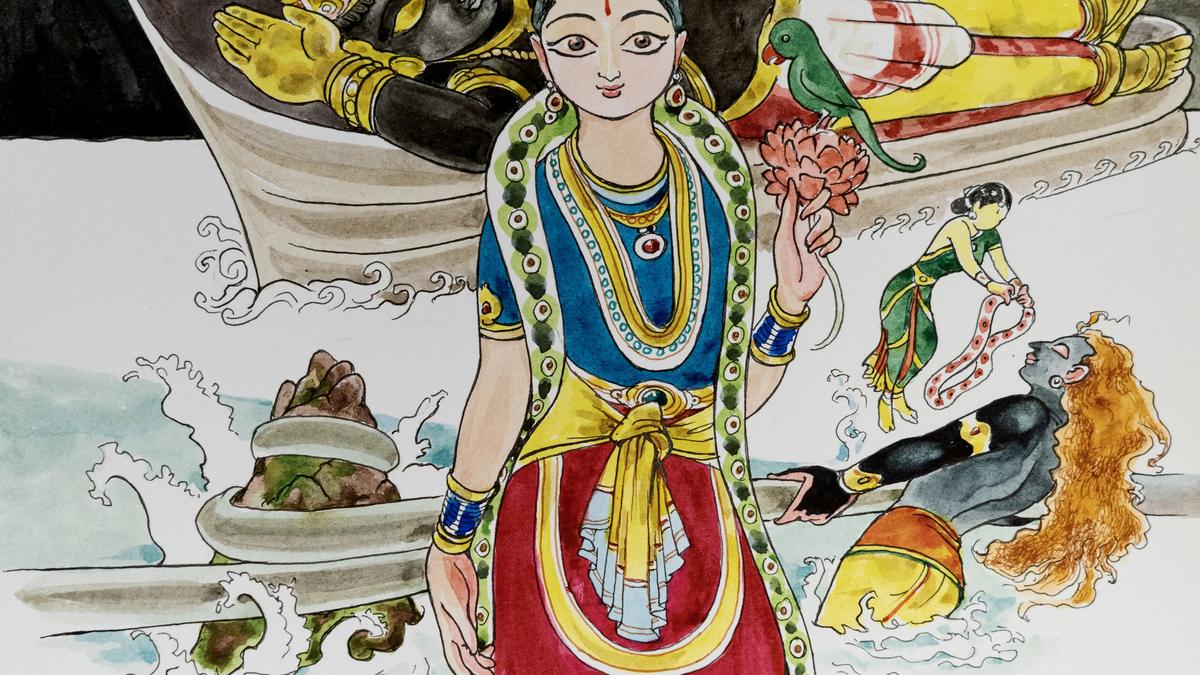
Margazhi special: Andal and the evolution of feminine expression Performer and choreographer Anita Ratnam reflects on how Goddess Andal, her eternal guide and companion, has influenced her art and life. Published - December 24, 2025 02:32 pm IST Anita R. Ratnam READ LATER SEE ALL Remove A depiction of Pasuram 30, the concluding verse of Tiruppavai | Photo Credit: Keshav “She watched and waited as you emerged into this world”. These were grandmother Saraswathi’s words to me, as I was preparing for my arangetram. I was an excited nine-year-old who loved to dance and was learning choreography for the first pasuram from the Tiruppavai, Andal’s iconic garland of verses adoring her favourite deity — Krishna. My special dance debut was at my maternal uncle’s wedding reception in Madras. In the 1960’s, full length classical music and dance performances were programmed at weddings. It was the trend for girls to not only learn Bharatanatyam but also a Tambalam (plate dance), Kurathi (gypsy/indigenous community) dance, Snake dance (made famous by Kumari Kamala) and to end with a Tiruppavai verse. I was most excited about my transformation as the young and dreamy poet. I loved the side top knot (kondai) and the Tulasi garland around my neck. How was I to know that She would invade my heart, body and mind in the years to come. My grandmother felt I danced the Andal portion the best. “I think She was watching and smiling,” she said, as she stroked my hair. I urged her to tell me the Andal story all over again. I grew up listening to the Tiruppavai being rendered at home, and was especially taken in by the 29th pasuram, in which Andal vows to be reborn again and again only to serve Krishna. It was as if her entire body was humming with prayer and song. How could someone so young dream, sing and write with such amazing clarity? Andal is the only women saint-poet to have a temple of her own, which is at Srivilliputhur. | Photo Credit: S.R. Raghunathan Years later, during her final days, my grandmother told me: “Your destiny is to dance and sing about Narayana, like Andal. The narrative of marriage is not meant for you!” While I memorised the entire 30 Tiruppavai pasurams, I did not begin to dissect the words until much later. I understood the self belief, complete surrender, supreme confidence and fierce joy that comes with deep love. Andal’s poems are like a riddle. On the outside, it is all sweet and unrestrained devotion but reveals a tender, bruised and vulnerable voice. This brilliant Tamil poet of 7th century CE was among the earliest in the pantheon of mystic female dreamers and the only one to have her own temple. She was a living tradition, who burst boundaries of identity and geography. But who was Andal in my mind? How did she look? What did her voice sound like? Did she have a long braid? Why the top knot? What was...
Preview: ~500 words
Continue reading at Thehindu
Read Full Article