Textbooks Challenged: Scientists Discover New Mechanism of Cell Division
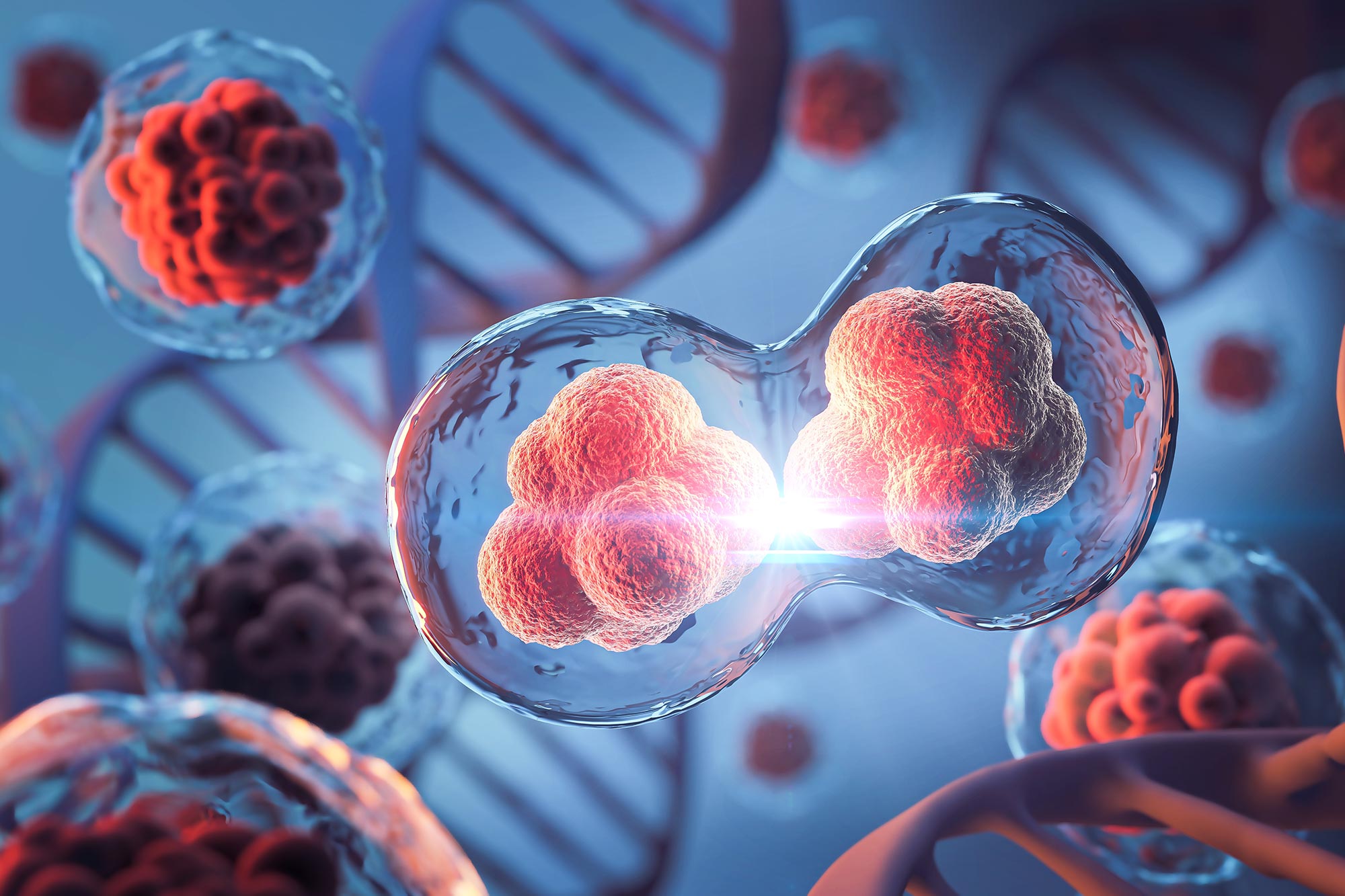
Early embryonic cell division in large, yolk-rich cells has long defied traditional models of cytokinesis. New research reveals that instead of relying on a fully closed contractile ring, cells can divide through a dynamic interplay between cytoskeletal structures and changing material properties of the cytoplasm. Credit: Shutterstock A zebrafish embryo during the first cell division cycle, with the structural protein actin labelled, which marks the cell boundary and ingressing furrow. The image shows a time course from dark orange (before ingression) to brighter orange and finally white as ingression proceeds. Credit: Alison Kickuth, Brugués Lab Scientists have uncovered a new way embryonic cells divide when conventional mechanisms fail. Cell division underpins all forms of life, but scientists have long struggled to explain how this process unfolds during the earliest stages of embryonic development, especially in egg-laying species. Researchers from the Brugués group at the Cluster of Excellence Physics of Life (PoL) at TUD Dresden University of Technology have now identified an unexpected mechanism that allows early embryonic cells to divide without forming a complete contractile ring, a structure traditionally thought to be indispensable. Their results, reported in Nature , overturn conventional textbook explanations of cell division. The study shows that elements of the cytoskeleton work together with the physical properties of the cell interior (or cytoplasm) to drive division through what the researchers describe as a ratchet-like process. Rethinking the Contractile Ring Model In many organisms, cell division relies on a contractile ring made of the protein actin that forms around the middle of the cell. As this ring tightens, much like a drawstring, it squeezes the cell until it splits into two separate cells. While this purse-string mechanism is common, it does not apply to all species. Animals with extremely large embryonic cells, including sharks, platypuses, birds, and reptiles, present a special challenge. Their cells contain massive yolk sacs and are so large that the actin ring cannot fully close, making the standard division model ineffective. For years, how these oversized cells manage to divide remained unresolved. “With such a large yolk in the embryonic cell, there is a geometric constraint. How does a contractile band, with loose ends, remain stable and generate enough force to divide these huge cells?” asked Alison Kickuth, a recently graduated PhD student from the Brugués group at the Cluster of Excellence Physics of Life (PoL) and lead author of the study. Their experiments, published in a seminal new study in Nature , have found an answer to this question. To uncover the mechanism, the researchers turned to zebrafish embryos, which divide quickly and also contain large, yolk-rich cells during early development. Using a laser to cut through the actin band with high precision, Kickuth found that the band continued to move inward even after being severed. This behavior indicated that the band was supported by multiple anchoring points along its length rather than relying solely on its ends. The Role of Microtubules in Stabilization In addition, it seemed that microtubules, another essential part...
Preview: ~500 words
Continue reading at Scitechdaily
Read Full Article