Greenland is about climate change, strategy and rare earths
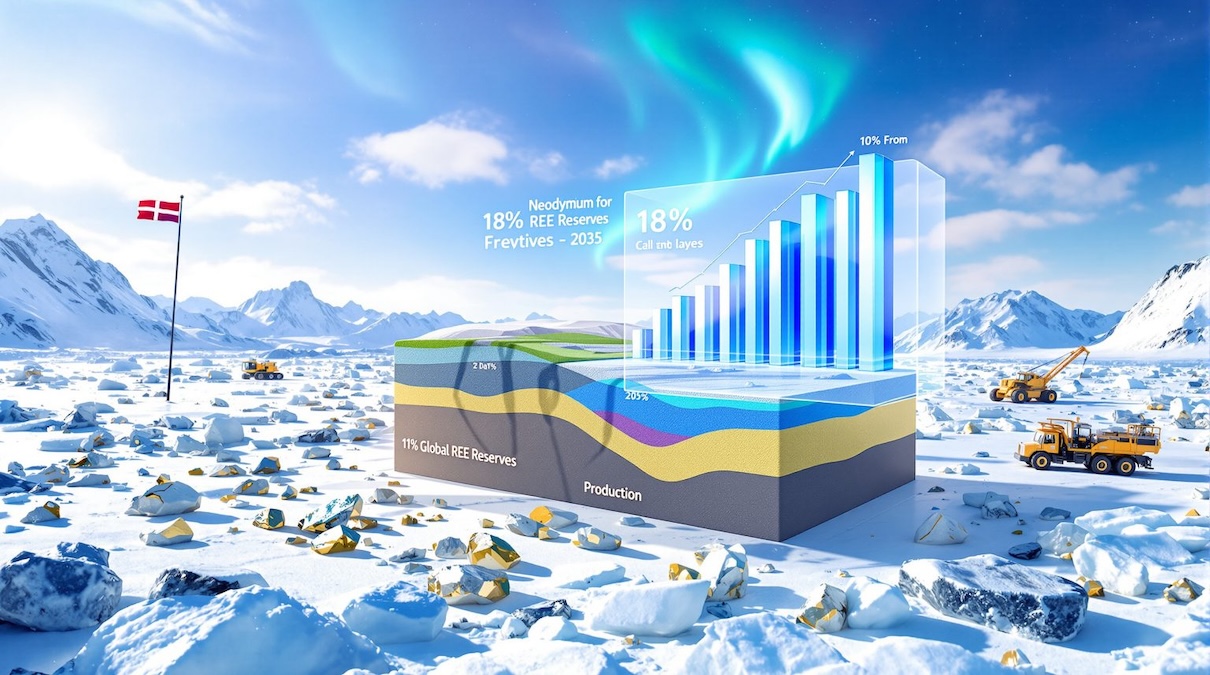
Two things could happen in Greenland in the future, assuming warming trends continue. US Coast Guard Cutter Healy (WAGB-20) sits approximately 100 miles north of Barrow, Alaska, in order to conduct scientific ice research. Scientists aboard the Healy are taking core samples from the bottom of the Arctic Ocean on June 18, 2005. anthropology.uwaterloo.ca/ArcticArchStuff The first is that sea passage through the frozen Arctic would open a much faster sea trade route to the Pacific. If the passage becomes viable, it changes Greenland from a backwater land mass into one of strategic importance. The US knows quite a lot about Russia’s arctic operations, and its nuclear powered icebreakers. There are around seven or eight in service, including several new Project 22220 (Arktika-class) vessels including Arktika , Sibir , Ural and Yakutiya , plus older ships such as Yamal and 50 Let Pobedy , with more under construction to expand Arctic dominance. For comparison, the US Coast Guard operates three polar icebreakers: the heavy-duty USCGC Polar Star (1976) for Antarctic resupply and the medium USCGC Healy (2000) for Arctic research, supplemented by the newly acquired commercial vessel USCGC Storis (converted in 2025) to boost capability. The US is actively recapitalizing its aging fleet through the Polar Security Cutter (PSC) program, with construction underway for new heavy icebreakers (PSCs) and medium Arctic Security Cutters (ASCs) to meet growing demands in the Arctic and Antarctic. None of the US icebreakers is nuclear. The second big change, assuming climate change continues, is that much of the frozen land in Greenland - the island is 80% ice - will become open for settlement and geological exploitation. Greenland is thought to have massive deposits of rare earth minerals, and Washington sees those deposits as critical to US national security. In the interim, the US is dangerously dependent on Chinese largesse, as China controls most rare earth production. The US has been trying to pressure Denmark into selling Greenland. Both Denmark and the local Greenland population oppose selling to the United States. Greenland is 89% Inuit or Inuit-Danish. Most are descendants of Thule Inuit who migrated from North America, today’s Alaska and western Canada, around the years 1000 to 1200. While the culture originally was shamanistic, today’s Inuit in Greenland are predominantly Evangelical Lutheran. anthropology.uwaterloo.ca/ArcticArchStuff Most of the local population would prefer autonomy from all outside powers, but otherwise they accept a relationship with Denmark and, to a lesser degree, NATO protection. Most also have opposed mineral extraction, allegedly for environmental reasons (rare earth minerals extraction involves uranium deposits that are brought to the surface with the rare earths materials). One of the largest rare earths projects , Kvanefjeld, located near the town of Narsaq (in the southwest of Greenland), was effectively shut down in 2021. That project was led by Energy Transition Minerals (ETM) and by China’s Shenghe Resources Holding Company, Ltd. Shenghe is a partly state owned company. Energy Transition Minerals is suing Greenland for damages, accusing it of creating uncertainty about future mining investments...
Preview: ~500 words
Continue reading at Asiatimes
Read Full Article