Spaced repetition for efficient learning (2019)
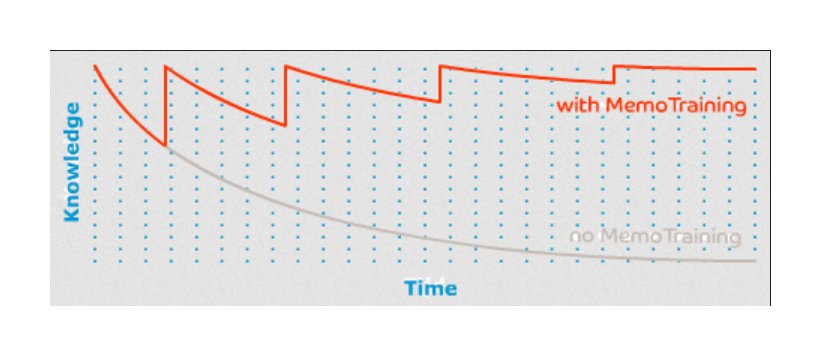
Spaced Repetition for Efficient Learning Efficient memorization using the spacing effect: literature review of widespread applicability, tips on use & what it’s good for. Stahlet al2010;CNS Spectrums Wired(original, Wozniak?); massed vs spaced (alternative) Scumbag Brain meme: knows everything when cramming the night before the test / and forgets everything a month later A wildly varying but clearly decreasing graph of predicted cards per day Spaced repetition is a centuries-old psychological technique for efficient memorization & practice of skills where instead of attempting to memorize by ‘cramming’, memorization can be done far more efficiently by instead spacing out each review, with increasing durations as one learns the item, with the scheduling done by software. Because of the greater efficiency of its slow but steady approach, spaced repetition can scale to memorizing hundreds of thousands of items (while crammed items are almost immediately forgotten) and is especially useful for foreign languages & medical studies. I review what this technique is useful for, some of the large research literature on it and the testing effect (up to ~2013, primarily), the available software tools and use patterns, and miscellaneous ideas & observations on it. One of the most fruitful areas of computing is making up for human frailties. They do arithmetic perfectly because we can’t 1 . They remember terabytes because we’d forget. They make the best calendars, because they always check what there is to do today. Even if we do not remember exactly, merely remembering a reference can be just as good, like the point of reading a manual or textbook all the way through: it is not to remember everything that is in it for later but to later remember that something is in it (and skimming them, you learn the right words to search for when you actually need to know more about a particular topic). We use any number of such neuroprosthetics 2 , but there are always more to be discovered. They’re worth looking for because they are so valuable: a shovel is much more effective than your hand, but a power shovel is orders of magnitude better than both - even if it requires training and expertise to use. Spacing Effect You can get a good deal from rehearsal, If it just has the proper dispersal. You would just be an ass, To do it en masse , Your remembering would turn out much worsal. Ulrich Neisser 3 My current favorite prosthesis is the class of software that exploits the spacing effect , a centuries-old observation in cognitive psychology, to achieve results in studying or memorization much better than conventional student techniques; it is, alas, obscure 4 . The spacing effect essentially says that if you have a question (“What is the fifth letter in this random sequence you learned?”), and you can only study it, say, 5 times, then your memory of the answer (‘e’) will be strongest if you spread your 5 tries out over a long period of time - days, weeks, and months....
Preview: ~500 words
Continue reading at Hacker News
Read Full Article