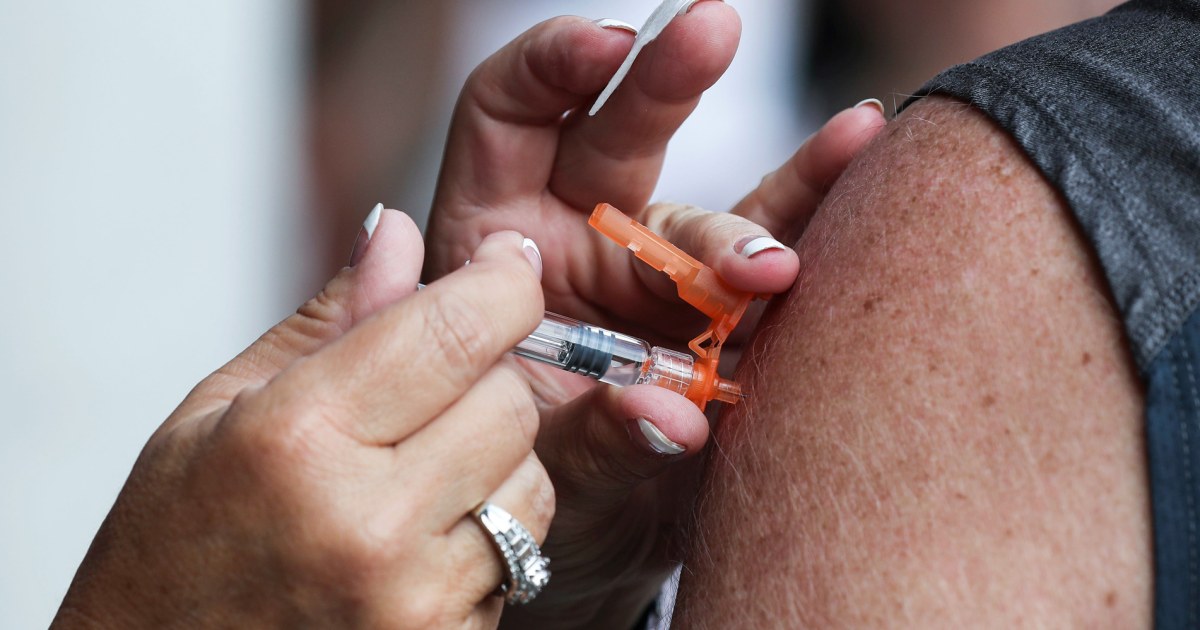
As tetanus vaccination rates decline, doctors worry about rising case numbers
Every doctor wants to see a smile on a patient’s face, but there is one that no doctor ever wants to see: risus sardonicus, sometimes known as the sardonic grin or the devil’s smile, the cruel mark of a tetanus infection. A woman walks along a flooded street in Osprey, Fla., in 2024 in the aftermath of Hurricane Milton.Sean Rayford / Getty Images file After decades of success against tetanus in the U.S., there are troubling signs that the deadly bacterial infection could make a comeback, a fallout from the drop in vaccination combined with a rise in climate change-related natural disasters that can increase the risk of exposure. In 1948, when the tetanus vaccine was first combined with diphtheria and pertussis, 601 cases of tetanus were reported in the U.S. In recent years, that has dropped to about 15 to 28 annual cases. In 2024, however, there were 32 cases. This year, there have been at least 37 confirmed cases, the most in over a decade. An NBC News/Stanford University investigation has found widespread declines in kindergarten vaccination against tetanus. In states that provided data back to 2019, more than 75% of counties and jurisdictions across the U.S. have seen downward trends in young children getting the diphtheria-tetanus-pertussis (DTaP) series of shots. The vaccine is first given to babies at 2 months. Because tetanus isn’t spread from person to person, there isn’t a herd immunity threshold, but reductions in vaccination rates leave more people vulnerable to the disease. Doctors are worried about even a small uptick in the terrible infection, often called lockjaw. Symptoms, which can take three to 21 days to appear , include muscle spasms that make it difficult to breathe. As the infection takes hold, a patient’s jaw clenches, forcing the face into what appears to be a wide smile, and the back muscles contort into a painful arch. “It looks terrible,” said Dr. Mobeen Rathore, chief of pediatric infectious diseases and immunology at the University of Florida College of Medicine-Jacksonville. Tetanus bacteria live in soil and manure. An infection can occur from a puncture wound, and the disease can persist through weeks of medical care. Treatment can be arduous and costly. A 6-year-old unvaccinated boy in Oregon racked up almost $1 million in medical bills after he contracted tetanus in 2019, according to a Centers for Disease Control and Prevention case report. Rathore compared the cost of vaccines to the cost of intensive care. “It’s not even pennies to dollars; it’s pennies to hundreds of thousands of dollars,” Rathore said. “It’s very expensive.” When a 9-year-old unvaccinated patient came to Rathore with muscle spasm in Florida this year, he recognized the signs. He remembered the tetanus wards from his medical school days where patients were cared for in dark and silent isolation. “The slightest noise would cause many of these patients to go into spasm,” Rathore said. Tetanus spasms, which can also be triggered by light (known as “photophobia”), are extremely painful and can constrict...
Preview: ~500 words
Continue reading at Nbcnews
Read Full Article