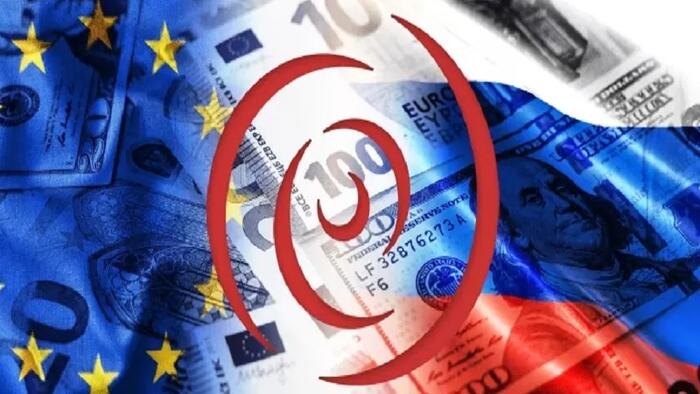
The EU's Failed Attempt To Steal Russia's Seized Assets Was Self-Discrediting
The EU's Failed Attempt To Steal Russia's Seized Assets Was Self-Discrediting Authored by Andrew Korybko via Substack, It arguably dealt irreparable damage to the bloc’s reputation as a safe location in which foreigners the world over could store and invest their financial assets after influential members left no doubt about their desire to steal its assets, thus signaling that they might try to steal other countries’ one day too. It was assessed last week that “ The EU’s New Policy Towards Russia’s Seized Assets Isn’t About Helping Ukraine ” after influential members of the bloc moved to either outright confiscate at least some of Russia’s seized assets for giving to Ukraine or use at least some of them as collateral for a loan to it. As was written, the real purpose was denying the US access to these funds for joint projects with Russia per point 14 of Trump’s reported 28-point peace deal framework , not arming Ukraine or reconstructing it. For as much as European Commission President Ursula von der Leyen and her compatriot German Chancellor Friedrich Merz tried, they failed to reach consensus on this unprecedented move, which would have provoked the US’ wrath like was explained in the analysis above. Instead, they reached a compromise whereby members - except Czechia, Hungary, and Slovakia - will raise common debt to finance a €90 billion loan to Ukraine over the next two years, thus perpetuating the conflict . This was an attempt to “save face” after their whopping 16-hour-long talks on this issue since no outcome at all would have exposed the bloc’s impotency, yet The Economist concluded right afterwards that the US will still see it that way since its two most powerful politicians ultimately didn’t get their way. To add insult to the injury inflicted upon the German Chancellor’s reputation, the Financial Times then cited a source who claimed that “Macron betrayed Merz” by not backing the latter’s plot. The EU’s failed attempt to steal Russia’s seized assets was therefore self-discrediting for him and von der Leyen personally but also for the EU as a whole since it arguably dealt irreparable damage to the bloc’s reputation as a safe location in which foreigners the world over could store and invest their financial assets. Even though Russia’s seized ones weren’t (yet?) stolen, there’s no longer any doubt that influential members of the EU had the intent to do so, thus shattering the aforesaid perception. As was written in the analysis hyperlinked to in the introduction, “Foreign investors might be spooked into fearing that their assets are no longer safe and could thus pull them from EU banks and not deposit future ones there either. The bloc might therefore ultimately lose hundreds of billions of dollars, perhaps upwards of a trillion or even more with time”. After all, since they tried to steal Russia’s assets, they might also try to steal the assets of other countries with which they might have problems one day too. Unlike Russia, however, relatively...
Preview: ~500 words
Continue reading at Zerohedge
Read Full Article