When is a sausage not really a sausage? Ask the meat lobby | George Monbiot
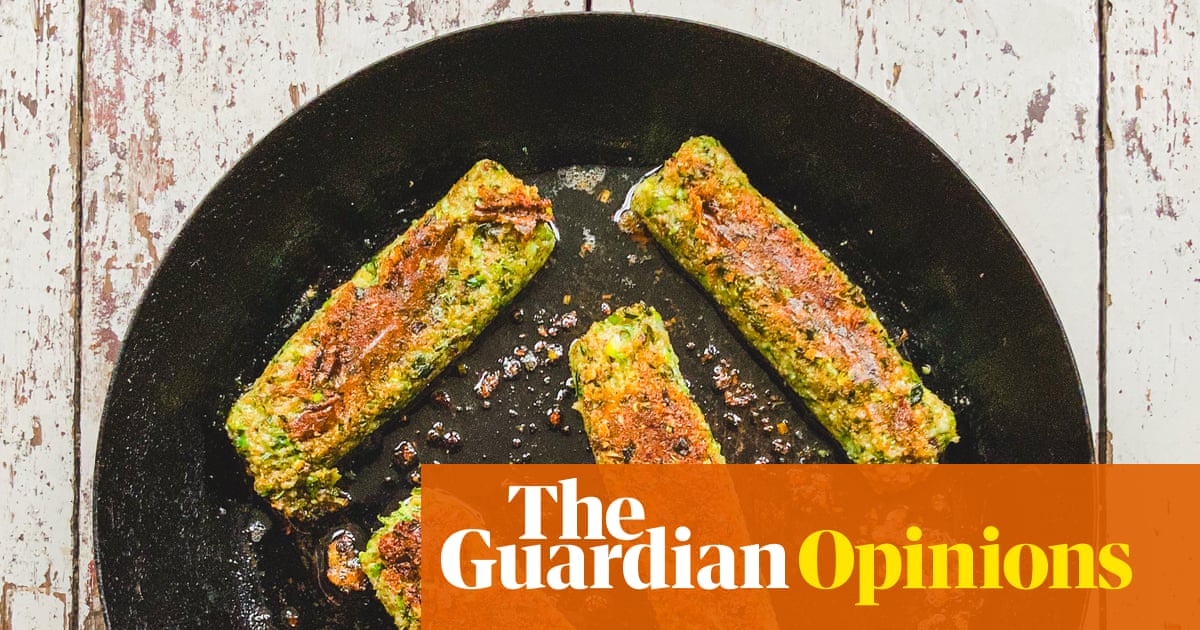
Most of what you eat is sausages. I mean, if we’re going to get literal about it. Sausage derives from the Latin salsicus , which means “seasoned with salt”. You might think of a sausage as a simple thing, but on this reading it is everything and nothing, a Borgesian meta-concept that retreats as you approach it. ‘Never mind that cylindrical objects containing no meat have been marketed under names such as “Glamorgan sausage” (selsig Morgannwg) for at least 150 years.’Photograph: Tom Hunt/The Guardian ‘From another perspective, a sausage is an offal-filled intestine.’Photograph: Westend61/Getty Images From another perspective, a sausage is an offal-filled intestine, or the macerated parts of an electrocuted or asphyxiated pig or other animal - generally parts that you wouldn’t knowingly eat - mixed with other ingredients that, in isolation, you might consider inedible. For some reason, it is seldom marketed as such. But to the legislators of the EU, a sausage can now have only one meaning: a cylindrical object containing meat . Never mind that cylindrical objects containing no meat have been marketed under names such as “ Glamorgan sausage ” ( selsig Morgannwg ) for at least 150 years. Never mind that even Germans once felt the need to call animal sausages mettwurst , to distinguish them from other kinds. Never mind that almost everyone knows what “veggie sausage”, “vegan sausage” or “plant-based sausage” mean. A recent survey of 20,000 Dutch people found that 96% are not confused by such terms, which is probably a higher percentage than those who can readily distinguish left from right. The consumer must at all costs be protected from an imaginary threat. For the same reason, members of the European parliament decided, burgers must also contain meat . It happens that no one is sure why a burger is called a burger. They were once called “Hamburg steaks”, but no clear link to Hamburg has been established. Nevertheless, before the term was abbreviated, meat patties were widely known as hamburgers, whose literal meaning is an inhabitant of Hamburg. If “veggie burgers” are misleadingly marketed, so is any burger not made from the minced inhabitants of a north German city. Last week, the European Council and European Commission tried and failed to make sense of all this. They were unable to agree a common position with the European parliament, and bumped the decision to January, when a new council presidency will have to deal with it. I can’t blame them. You cannot make sense of a senseless policy. The parliament’s food literalism is remarkably selective. Given the time of year, perhaps I should point out that there is no meat in mincemeat, which is used to fill mince pies. Many years ago there was, but the meat component fell out of fashion. Minced meat, by contrast, is meat - I’m sure that’s not confusing. Similarly, sweetbreads are meat, but sweetmeats are not. None of these terms appear to cause any problems for legislators, though they have insisted that the...
Preview: ~500 words
Continue reading at Murmel
Read Full Article