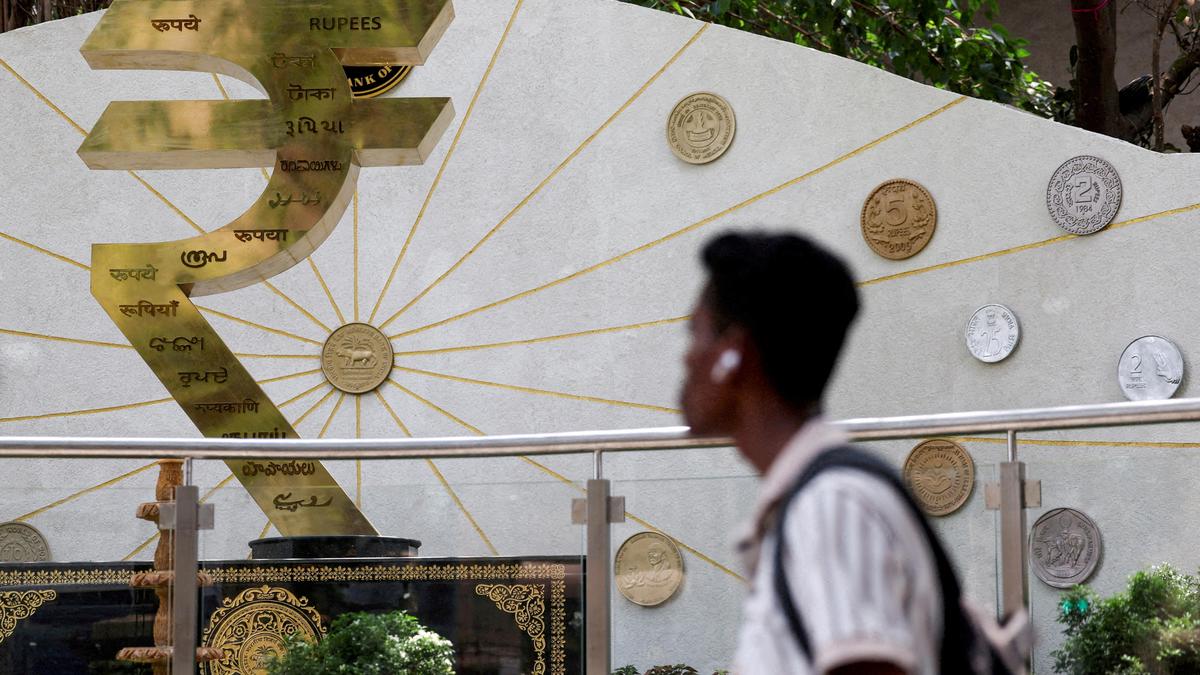
What are the signals from the Indian economy? | Explained
The story so far: The year 2025 has been rocky for the Indian economy. While the government has implemented several policy changes that are positive for the economy, several other factors, some international and some domestic, continue to play spoilsport. What has gone well in the year? The year began on a reasonably positive footing. In February, Prime Minister Narendra Modi and U.S. President Donald Trump jointly announced that the two countries would work towards a Bilateral Trade Agreement, basically a free trade deal, by the fall of this year. That same month, Finance Minister Nirmala Sitharaman also presented Budget 2025 , in which she implemented several changes to the income tax rates and slabs that would essentially reduce the tax burden on the bulk of taxpayers. This, too, was hailed as a strong move to boost demand. While the Budget announcement was aimed at increasing disposable incomes by reducing the tax on incomes, September saw the GST Council approach the problem from another direction. The Council did away with the 12% and 28% GST slabs and moved most items in each of the discarded slabs to the ones immediately below them. That is, most items in the 12% slab moved to 5%, and most items in 28% moved to 18%. Apart from this, the Centre in November also announced the implementation of the four Labour Codes , which increase social security for workers , including those on contract and gig workers, and provide them with various benefits, such as higher minimum wages, etc. What trade deals have been struck or implemented this year? Another positive feature of 2025 is the number of trade deals that India has concluded, implemented, or substantially moved forward on. The India-U.K. Comprehensive Economic and Trade Agreement was signed in July 2025, under which India is to receive duty-free access to most of the U.K. market, and enhanced provisions for the mobility of Indian labour in that country. The Trade and Economic Partnership Agreement between India and the European Free Trade Association (Switzerland, Norway, Iceland, and Liechtenstein), signed in March 2024, officially came into effect on October 1, 2025. Apart from the trade concessions, the EFTA countries agreed to invest $100 billion in India in 15 years. In an interview to The Hindu , Iceland’s Ambassador to India Benedikt Höskuldsson asserted that the $100 billion target would be achieved well before the 15 years were completed. In December, India and Oman signed a Comprehensive Economic Partnership Agreement (CEPA), and India and New Zealand also announced that they had concluded negotiations on a free trade agreement, under which India would receive duty-free access for 100% of the items it exports to New Zealand. Further, New Zealand has committed to invest $20 billion in India over 15 years. Commerce Minister Piyush Goyal has recently been asserting that India’s negotiations with the European Union over a trade deal are in their final stages. It is unclear, however, whether they will be concluded before the unofficial deadline of December...
Preview: ~500 words
Continue reading at Thehindu
Read Full Article