Implications of the Vande Mataram discourse
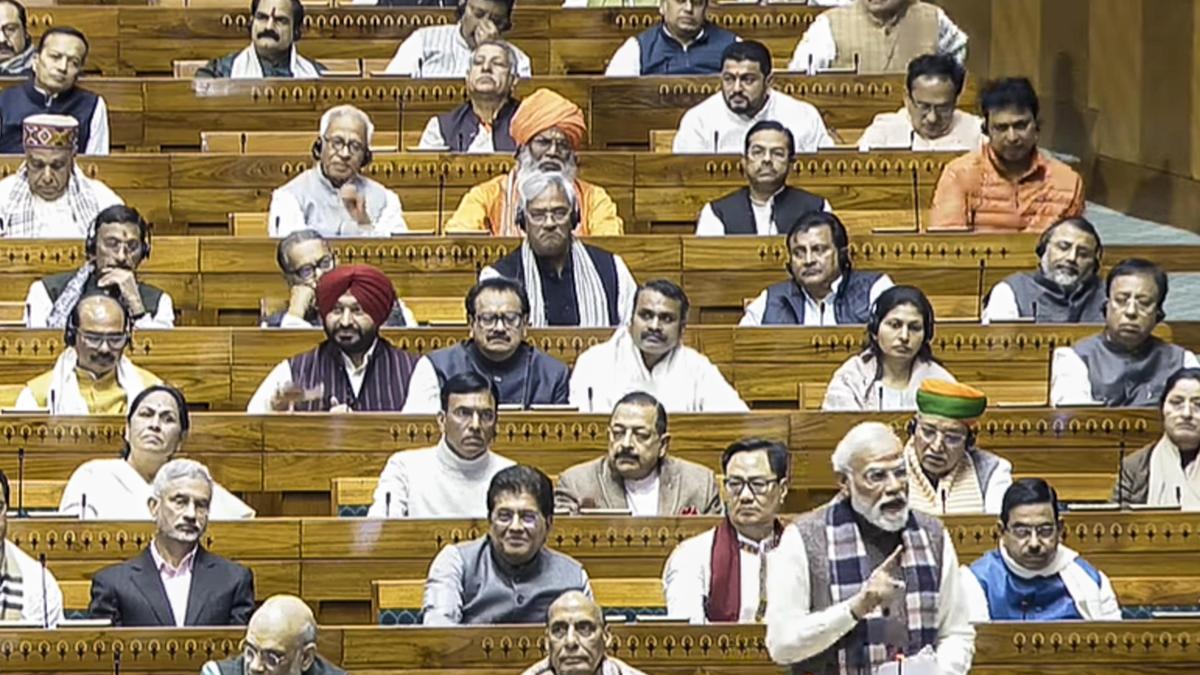
The recent debate in Parliament on Vande Mataram, held as part of its 150th anniversary, deserves to be welcomed, despite the fact that a few lawmakers from the Opposition parties linked it to the forthcoming Assembly elections in West Bengal. Several participants from the Bharatiya Janata Party (BJP), the Congress, and Trinamool Congress cited historian Sabyasachi Bhattacharya’s book, Vande Mataram: The Biography of a Song , as a key source. Not surprisingly, the debate has been accompanied by distortions. After all, politicians’ history is often more about politics than about scientific truth. This is why scholars need to engage with such debates, mainly to rescue facts from ideologically motivated interpretations. For secularists, the debate appeared to be more an exercise in Nehru-bashing than anything else. Given that the Congress is almost non-existent in West Bengal, one wonders what electoral profit the BJP might derive from this exercise. The key issue that has prominently re-emerged is whether Vande Mataram should be sung in its entirety or only in part, as is the case since Independence, in its avatar as India’s national song. According to Professor Bhattacharya, the song was probably written by Bankimchandra Chatterjee between 1872 and 1875, but it entered the public sphere through his novel Anandamath , published in 1881. The novel first appeared serially in Bangadarshan , a monthly journal founded by Bankimchandra. The first instalment of Anandamath was published in the 12th issue of the journal’s seventh year (Bengali circa 1287), and the final instalment appeared in the Jyaistha issue of Bengali circa 1289. According to Julius Lipner, Professor of Hinduism at the University of Cambridge, Bankimchandra had a deep knowledge of Sanskrit learning and regularly reviewed Sanskrit publications in Bangadarshan . He referred to Sanskrit passages, texts, and expressions in his writings. Aurobindo Ghose considered Bankim “the rishi of Indian nationalism.” The song played a vital role during the Swadeshi movement. However, around the 1930s, prominent leaders of major political organisations such as the Congress, Hindu Mahasabha, and Muslim League engaged in discussions over it, rendering it politically controversial. Some Muslim leaders objected to certain parts of it, viewing them as idolatrous. According to puritan interpretations of Islam, Muslims are to worship only Allah, the Creator of all, including Mother Earth and the motherland itself. They are not permitted to worship anyone else, not even Islam’s only messenger, Prophet Muhammad. It is said that the Prophet was very particular during his lifetime not to leave any image or portrait of himself, as he feared that followers might begin to worship his likeness over time. Among prominent leaders, Jawaharlal Nehru and Rabindranath Tagore understood how the extended version of the song might affect Muslim sensibilities. As a consequence, only the first two stanzas were adopted as the national song. Tagore said, “I freely concede that the whole of Bankim’s Vande Mataram poem, read together with its context, is liable to be interpreted in ways that might wound Muslim susceptibilities.” Even Mahatma Gandhi, who was initially enthusiastic about...
Preview: ~500 words
Continue reading at Thehindu
Read Full Article