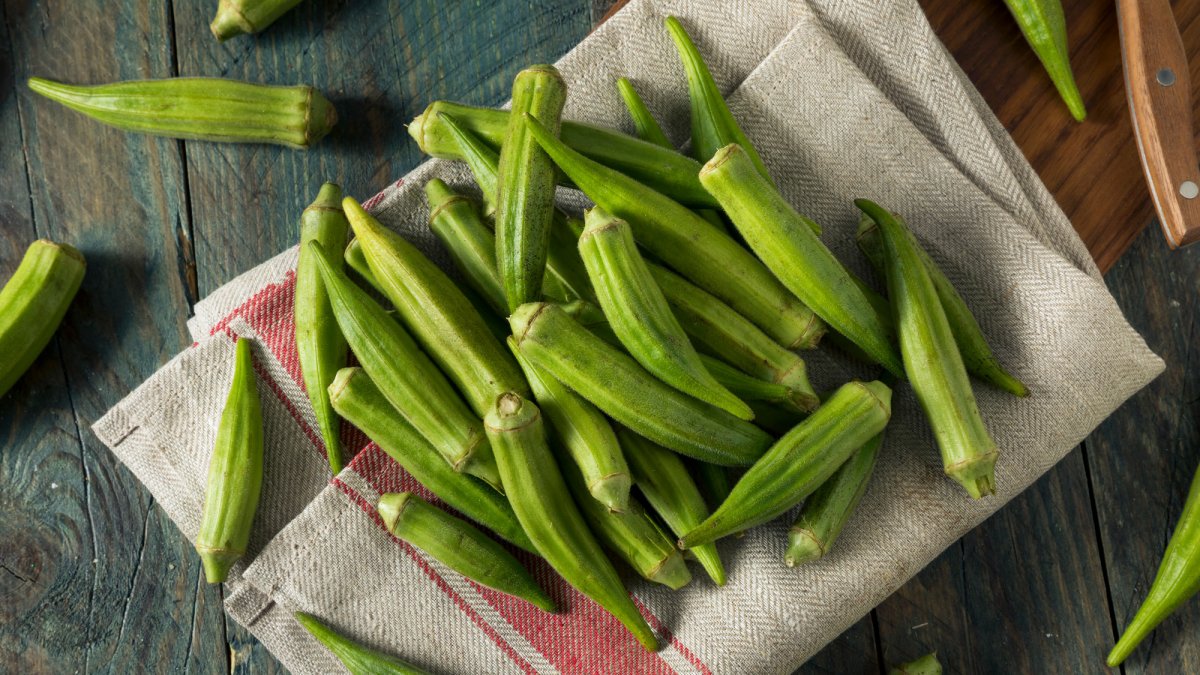
Why is okra so slimy? Blame the mucilage.
Okra is one of those vegetables with a polarizing reputation. Whether you call it slimy, gooey, sticky, or slippery, if you’ve eaten okra, you probably have an opinion about its unique texture, which is more properly described as “mucilaginous.” Some okra recipes strive to minimize slime ; others celebrate and embrace the thickening it provides to dishes like Louisiana gumbo . But did you ever wonder why okra is so gooey? What’s the source, and what purpose does it serve for the okra plant? Mucilage protects okra seeds The edible part of okra is the plant’s immature seedpods, which contain high levels of a substance called mucilage. Food science writer Harold McGee described mucilage in his book On Food and Cooking: The Science and Lore of the Kitchen as “a complex mixture of long, entangled carbohydrate molecules and proteins that helps plants and their seeds retain water .” Basically, mucilage is the watery slime around the okra seeds. As the seeds develop, their moist coating protects them from drying out. Okra likely evolved its slime (or, more accurately, mucilage) as a water-conserving adaptation for growing in hot, dry climates. McGee notes that the okra plant “originated in either southwest Asia or eastern Africa, and came to the southern United States with the slave trade.” Today, okra is popular in many tropical and subtropical regions of the world, and is known for its high tolerance to heat and drought when compared with other crops. Mucilage is found across the plant world Okra is not the only plant with goo-producing levels of mucilage. It’s a common feature of desert plants like cacti and succulents, which have a similar need to store water. Other edible examples include some seaweeds, and leafy greens such as Malabar spinach , native to Asia, and molokhia , popular in parts of Africa and the Middle East. Mucilage is actually produced in smaller quantities by almost all plants, as well as by some microorganisms. Single-celled protists like amoebas propel themselves on a trail of mucilage , similar to the slime trail of a snail. Japanese natto , made from fermented soybeans, gets its signature stretchiness from bacterial cultures . natto , made from fermented soybeans, takes advantage of mucilage to get its signature stretch. Image: DepositPhotos “The majority of plants produce mucilage from the seed coat,” according to a 2021 research review . However, the way that mucilage keeps seeds moist can vary. While okra seeds grow inside a mucilage coating, in other plants, mature seeds that have been shed produce mucilage by absorbing water from their surroundings. You can see this yourself when you soak chia seeds to make a chia pudding , or flaxseeds to make a “flax egg” for vegan baking . Each tiny seed sucks up water to form a layer of mucilage, creating a gel-like texture. There are also other ways plants use mucilage beyond water conservation. Carnivorous sundews use droplets of mucilage as glue traps for insects. Sierra Mixe or olotón ,...
Preview: ~500 words
Continue reading at Popsci
Read Full Article