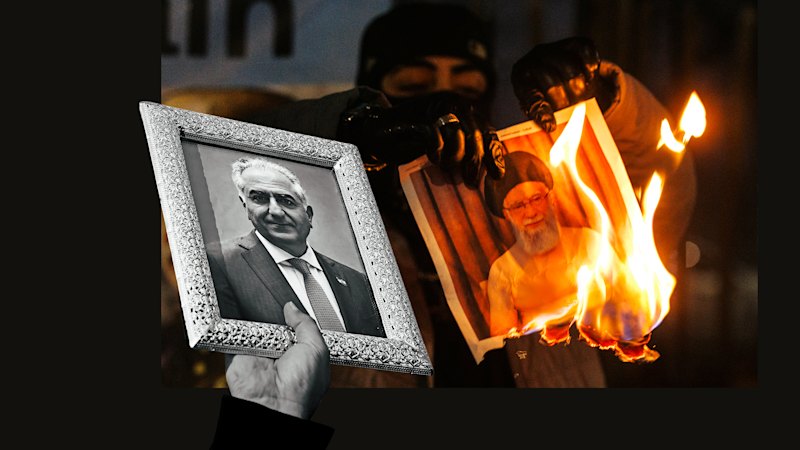
As Iranians risk their lives to protest, an exiled prince emerges as a leader
Save Log in , register or subscribe to save articles for later. Save articles for later Add articles to your saved list and come back to them any time. Got it Normal text size Larger text size Very large text size For more than a week, Shirin has waited for news of her sister in Tehran. “I knew that she’s going to protest,” says the Iranian-Australian engineer, whose name has been changed to protect her family members. “Everyone actually feels that responsibility to go out.” That was on January 8. Already human rights agencies were reporting that dozens of people had been killed in the protests, which began late last year in the city’s bazaars as the currency’s value deteriorated . The same day, Iran’s leaders cut internet access , imposing a digital blackout that has made calls and messages impossible. “There is always a chance that my sister will be in prison,” Shirin says. “I don’t know whether she’s alive or not.” Amid the fear, however, there is also hope that this round of protests might achieve what those in 2009, 2017-2018 and 2022 could not: the end of the Islamic Republic. An anti-government protest in Tehran. Credit: AP Under an internet blackout, the already difficult task of making predictions becomes harder still. Iran’s leaders are practiced at putting down uprisings. President Donald Trump, who promised “help is on its way” , has so far held back from military strikes even as the confirmed death roll rises above 2600, according to the human rights group HRANA. The US has announced new sanctions instead. Advertisement At the same time, the demonstrations – which have spread throughout the provinces – are the largest in the 46 years the theocratic regime has held power. Loading “The question is not if it will fall, but when,” Kylie Moore-Gilbert, the Australian analyst imprisoned by Iran for more than two years on unsubstantiated spying charges, wrote this week. “The catastrophic collapse of Iran’s economy, coupled with widespread outrage at the unimaginable cruelty of the brutal crackdown … almost guarantees another round of protest.” But if a revolution succeeds and citizens tear down the watchful portraits of Supreme Leader Ayatollah Ali Khamenei from the walls, who will replace him? Who writes the next chapter for a country with a Persian history dating back five millennia? The name of one leader has been chanted from cities to the countryside, the son of an autocrat, who promises not to become one himself. Advertisement In 1978, Crown Prince Reza Pahlavi visited the Great Barrier Reef, dined with the governor of NSW and spent time at the War Memorial in Canberra as part of an official visit. Soon after, the 17-year-old moved to the United States to train as a fighter pilot at a Texas airbase. His father Mohammad Reza, the shah or king of Iran, was close to the US. A 1953 coup by American and British intelligence agencies had installed him as the country’s undisputed leader. But over...
Preview: ~500 words
Continue reading at Com
Read Full Article