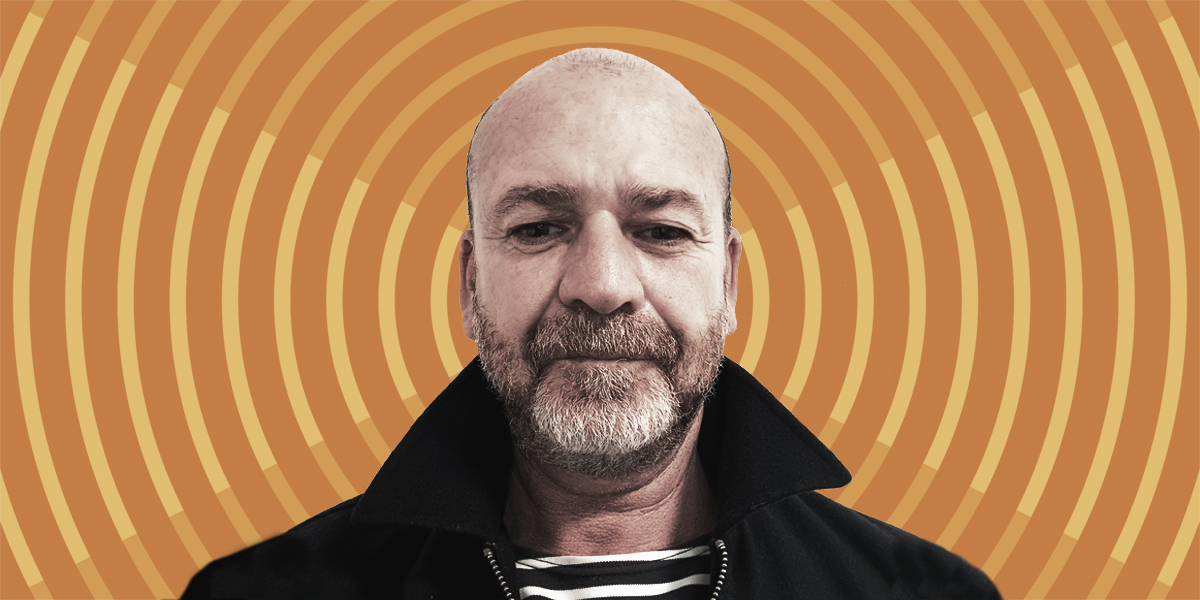
Speaking Freely: Sami Ben Gharbia
Interviewer: Jillian York Sami Ben Gharbia is a Tunisian human rights campaigner, blogger, writer and freedom of expression advocate. He founded Global Voices Advocacy, and is the co-founder and current publisher of the collective media organization Nawaat , which won the EFF Award in 2011 . Jillian York: So first, what is your personal definition, or how do you conceptualize freedom of expression? Sami Ben Gharbia: So for me, freedom of expression, it is mainly as a human. Like, I love the definition of Arab philosophers to human beings, we call it “speaking animal”. So that's the definition in logic, like the science of logic, meditated on by the Greeks, and that defines a human being as a speaking animal, which means later on. Descartes, the French philosopher, describes it like the Ergo: I think, so I am. So the act of speaking is an act of thinking, and it's what makes us human. So this is my definition that I love about freedom of expression, because it's the condition, the bottom line of our human being. JY: I love that. Is that something that you learned about growing up? SBG: You mean, like, reading it or living? JY: Yeah, how did you come to this knowledge? SBG: I read a little bit of logics, like science of logic, and this is the definition that the Arabs give to define what is a human being; to differentiate us from, from plants or animals, or, I don't know, rocks, et cetera. So the humans are speaking, animals, JY: Oh, that's beautiful. SBG: And by speaking, it's in the Arabic definition of the word speaking, it's thinking. It's equal to thinking. JY: At what point, growing up, did you realize...what was the turning point for you growing up in Tunisia and realizing that protecting freedom of expression was important? SBG: Oh, I think, I was born in 1967 and I grew up under an authoritarian regime of the “father” of this Tunisian nation, Bourghiba , the first president of Tunisia, who got us independence from France. And during the 80s, it was very hard to find even books that speak about philosophy, ideology, nationalism, Islamism, Marxism, etc. So to us, almost everything was forbidden. So you need to hide the books that you smuggle from France or from libraries from other cities, et cetera. You always hide what you are reading because you do not want to expose your identity, like you are someone who is politically engaged or an activist. So, from that point, I realized how important freedom of expression is, because if you are not allowed even to read or to buy or to exchange books that are deemed to be controversial or are so politically unacceptable under an authoritarian regime, that's where the fight for freedom of expression should be at the forefront of of any other fights. That's the fight that we need to engage in in order to secure other rights and freedoms. JY: You speak...
Preview: ~500 words
Continue reading at Murmel
Read Full Article