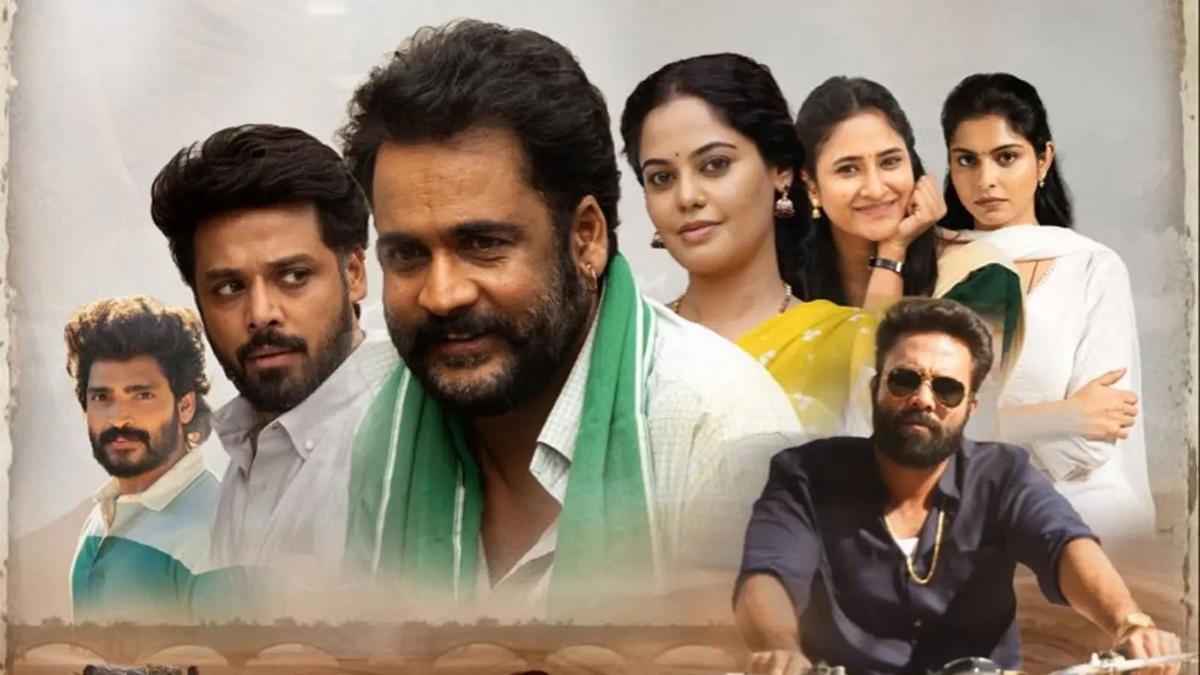
‘Dhandoraa’ movie review: Sivaji’s anti-caste drama is salvaged by a sharp post-intermission shift
Dhandoraa opens with a hauntingly impactful scene at a village in Medak where an elderly lady is denied dignity even in death, while a child screams out of trauma. In the vicinity, a young couple hailing from different castes dream of a hopeful tomorrow. The contrasting realities of the characters present one common and ugly truth - caste decides how they must live and die. Taking a cue from Balagam , the death of a patriarch is used as a vantage point for exploring family dynamics and the social hierarchies in the village. At the centre of this storm is a deceased man, Sivaji , with a complicated past. His son Vishnu (Shree Nandu) had cut all ties with him years ago, while village heads from his caste aren’t too happy with the ‘legacy’ he has left behind. Dhandoraa (Telugu) Director Muralikanth Devasoth is aided by a smart screenplay, using both halves of the film to depict various facets of Sivaji - as a brutal casteist, a rigid father, a passionate lover and a reformed man who pays for his sins. The first hour does everything to paint him in a negative light, and just when you have a strong reason to despise his existence, his compassionate side comes to the fore. Yet, the film is not only about Sivaji; it is equally centred on those who shape his worldview - his diabetic brother, the elderly men who thrive on caste pride, and those who’re impacted by his decisions - son, daughter and a sex worker. While Sivaji’s daughter Sujatha (Manika Chikkala) and her lover Ravi (Ravi Krishna) make a valiant effort to confront their realities, the son Vishnu kills his dream of a future with Swetha, even before he puts forth the proposal to his dad. Years later, the deep-rooted misogyny in Vishnu’s childhood manifests in a different form, when he hesitates to send his daughter on an industrial visit to another city. The film works less when it tackles the social malaise and is sharper when it gets personal, suggesting how humans are a bunch of contradictions. In typical Telugu cinema fashion for anti-caste narratives, no specific ethnic groups are named - there’s only a dominant caste and an oppressed caste. After laying a strong foundation for the story, the film briefly descends into chaos. The domestic drama, caste politics, and romance are needlessly stretched. In a scenario reversal, it feels like a completely different film post intermission. The noise makes way for intimate drama, passionate conversations, and thoughtful reflection - qualities one would not have expected from Dhandoraa early on. While it is a device as old as the hills, a sex worker catalyses Sivaji’s redemption after a tragedy. Another key sub-plot involving her abandoned daughter culminates in a dramatic and intense climax, building on the idea of dignity in death. The storyteller’s success lies in the far-reaching impact of his pivotal yet flawed characters, regardless of the screen time. What the film lacks in terms of...
Preview: ~500 words
Continue reading at Thehindu
Read Full Article