‘It’s the wildest place I have walked’: new national park will join up Chile’s 2,800km wildlife corridor
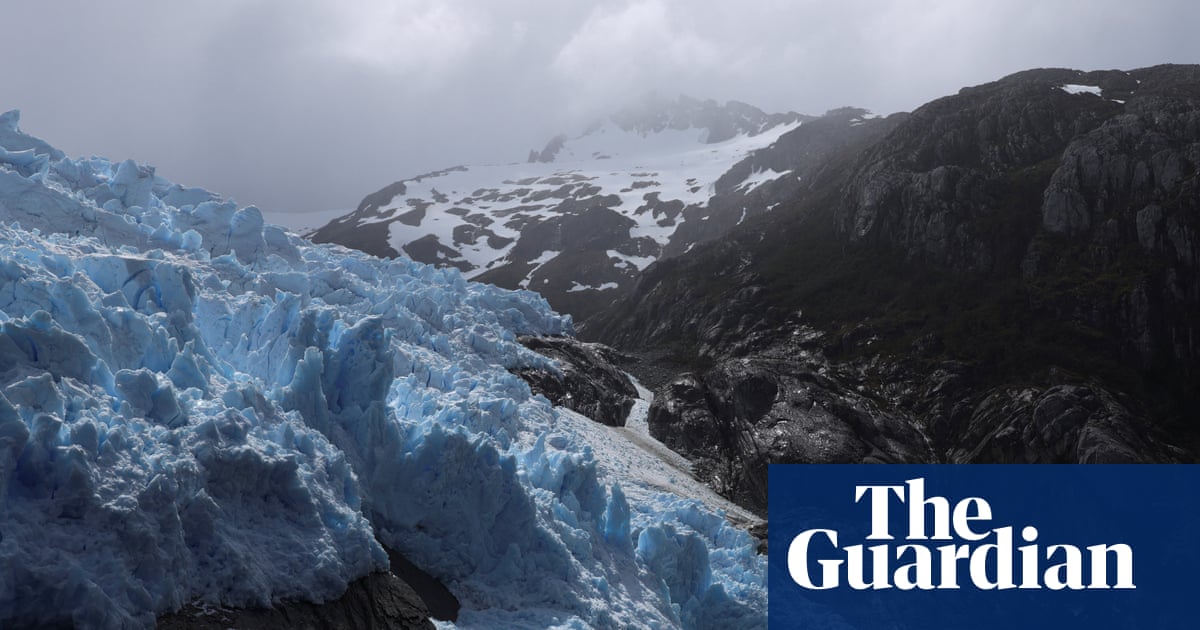
Chile’s government is poised to create the country’s 47th national park, protecting nearly 200,000 hectares (500,000 acres) of pristine wilderness and completing a wildlife corridor stretching 1,700 miles (2,800km) to the southernmost tip of the Americas. The Sarmiento de Gamboa glacier in the strait of Magellan. Chile’s planned Cape Froward national park lies on the north shore of the strait.Photograph: Pablo Sanhueza/Reuters Coastline near the former San Isidro lighthouse, which is being converted into a museum.Photograph: Pablo Sanhueza/Reuters A waterfall in the strait of Magellan, which links the Atlantic and Pacific Oceans.Photograph: Pablo Sanhueza/Reuters Gabriela Garrido, project coordinator for the Rewilding Foundation, which secured the land for the Cape Froward project.Photograph: Pablo Sanhueza/Reuters The southern Chilean coastline is dotted with archaeological sites that tell the history of the Kawésqar people.Photograph: Pablo Sanhueza/Reuters The forest covered by the Cape Froward project is home to endangered deer and otter species as well as wild pumas.Photograph: Pablo Sanhueza/Reuters The Cape Froward national park is a wild expanse of wind-torn coastline and forested valleys that harbours unrivalled biodiversity and has played host to millennia of human history. “I have been to many exceptional places, and I can tell you that the Cape Froward project is the wildest place I have walked through,” said Kristine Tompkins, the renowned US conservationist at the heart of the project. “It’s one of the few truly wild forest and peak territories left in the country, and the richness of the Indigenous history in the region makes a case for these territories to be preserved for all time.” It is the 17th national park created or expanded in Chile and Argentina by Tompkins Conservation and its successor organisation, Rewilding Chile. The groups have spent the best part of a decade knitting together a patchwork of land purchases and state-held properties to create the park. In 2023, they signed an agreement with the Chilean government to donate the land to become Cape Froward national park. In February, a population of 10 huemul, an endangered deer species, was found in the park, and a network of cameras regularly captures wild pumas and the endangered huillín, a river otter. The area also encompasses 10,000 hectares of sphagnum bogs, a spongelike moss which stores carbon deep below the ground. Benjamín Cáceres, the conservation coordinator in the Magallanes region for Rewilding Chile, is a native of Patagonia who first visited Cape Froward at the age of 12 with his conservationist father, Patricio Cáceres. “My father was always a dreamer,” he said. “When he found out about an abandoned lighthouse all those years ago, he brought us here as a family to dream with him - and that’s where this story began for me.” The San Isidro lighthouse is one of seven designed and built by the Scottish architect George Slight along the treacherous strait of Magellan. It was abandoned in the 1970s and itinerant fishers would come by to salvage wood until the roof collapsed. Now, Patricio and Benjamín’s vision for the restored lighthouse is...
Preview: ~500 words
Continue reading at Theguardian
Read Full Article