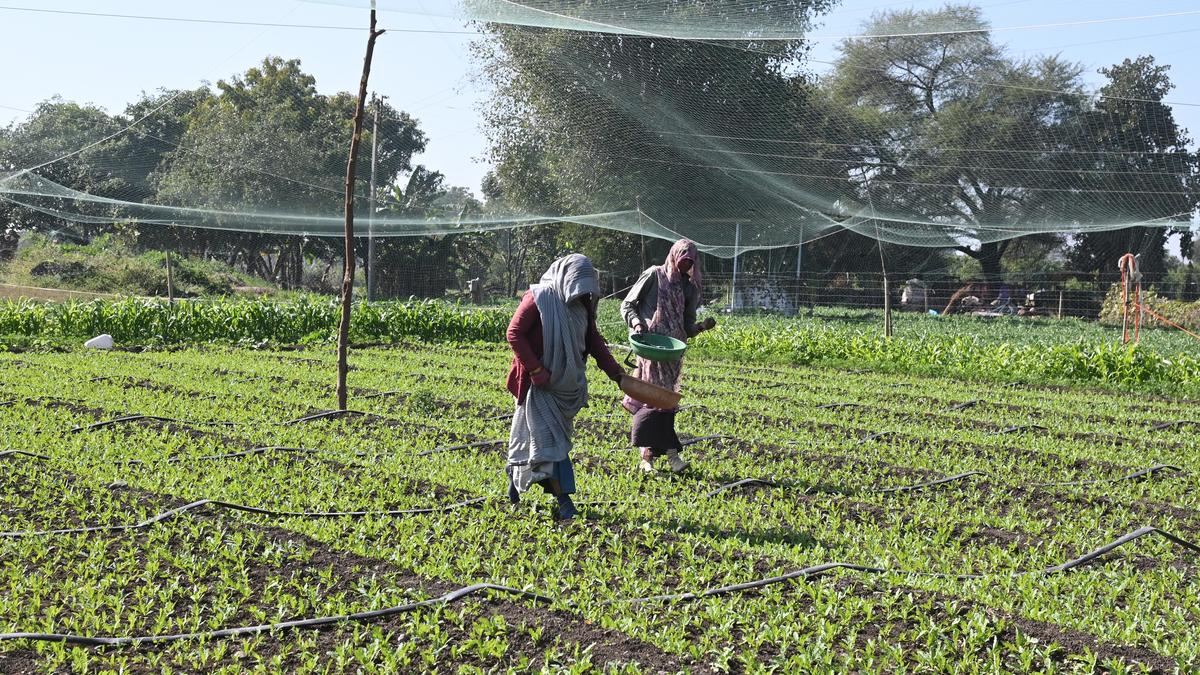
Tightening the opium belt in Madhya Pradesh
On the morning of August 28, a bus heading to Pratapgarh in Rajasthan was stopped soon after it began its journey from Madhya Pradesh’s Mandsaur district. A group of policemen in mufti entered the vehicle and deboarded an 18-year-old boy. Sohanlal Mirasi, a resident of Sarnon Ki Dhani village in Rajasthan’s Balotra district, was detained and later booked for illegally possessing 2.71 kilograms of opium. He was charged under Sections of the Narcotic Drugs and Psychotropic Substances (NDPS) Act, 1985. The event was recorded on the CCTV camera fitted on the bus. Sohanlal’s family approached the Madhya Pradesh High Court in Indore for his bail, armed with the 23-second footage, claiming that Sohanlal was empty-handed. On December 5, the High Court granted Sohanlal bail after his lawyer presented the footage. Justice Subodh Abhyankar remarked that the case filed at Mandsaur’s Malhargarh police station is “rather suspicious”. He summoned Mandsaur Superintendent of Police (SP) Vinod Kumar Meena to appear in the next hearing. On December 6, Meena suspended six police personnel, including the Malhargarh Station House Officer (SHO) Rajendra Panwar, two Sub-Inspectors and three constables, due to “procedural lapses”, while detaining and arresting Sohanlal. The case prompted the High Court to remark that the State police had “conveniently forgotten” the provisions of Sections 105 and 185 of the Bharatiya Nagarik Suraksha Sanhita, 2023, which lay out the procedures for search and seizure and audio-video recording of the process. It has now summoned the Principal Secretary of the State’s Home Department on January 12 “to apprise this Court about the steps taken to implement the aforesaid provisions”. While the M.P. police has faced backlash after the High Court’s stance, the case has brought into focus the opium cultivating regions of Madhya Pradesh and Rajasthan, and the challenges the people engaged in the generations-old livelihood are now facing. One challenge is the illegal trade of opium and crushed poppy straw, locally known as doda chura . Farmers and other locals say that they live under the constant fear of getting booked on charges of illegal possession or being named as part of a smuggling chain. They allege that people are also caught on fake charges and money extorted from them even if they are innocent. Sohanlal’s older brother, Khartaram Jaat, also alleges that his brother was “held in illegal custody, beaten and tortured” for about five hours after he was detained, and “₹12 lakh was demanded from him”. He says Sohanlal had finished school a few months before and wanted to start preparations for the civil services. “He had gone to Mandsaur to visit the Pashupati Nath Temple,” he says, adding that his brother has been “depressed” since the bail and barely talks to anyone. Madhya Pradesh’s Malwa region - Mandsaur, Neemuch, and Ratlam - is under scrutiny of four enforcement agencies: the opium regulatory body the Central Bureau of Narcotics (CBN), the Narcotics Control Bureau (NCB), the M.P. police, and the Narcotics Wing. The CBN had lodged 114 cases under the NDPS...
Preview: ~500 words
Continue reading at Thehindu
Read Full Article