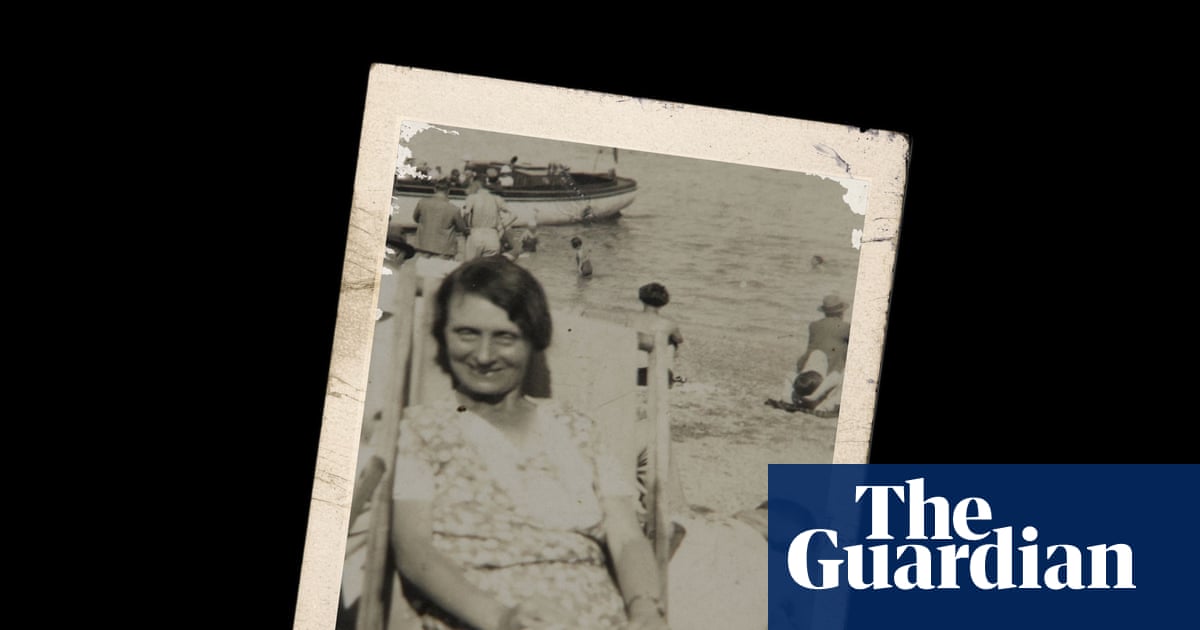
What happened next: how a shocking rape and murder case was solved – 58 years later
I n June 2023, Jo Smith, a major crime review officer for Avon and Somerset police, was asked by her sergeant to “take a look at the Louisa Dunne case”. Louisa Dunne was a 75-year-old woman who had been raped and murdered in her Bristol home in June 1967. She was a mother of two, a grandmother, a woman whose first husband had been a leading trade unionist, and whose home had once been a hub of political activity. By 1967, she was living alone, twice widowed but still a well-known figure in her Easton neighbourhood. Louisa Dunne in Clevedon, Somerset, in 1933.Composite: Guardian Design; Avon and Somerset Police/PA ‘I was quite excited’ … Jo Smith, the officer who reopened the case.Photograph: Sam Frost/The Guardian The Dunne investigation was nicknamed ‘Operation Beatle’ in a nod to its 1967 origin.Photograph: Sam Frost/The Guardian Ryland Headley, who was found guilty of Louisa Dunne’s rape and murder and sentenced to life.Photograph: Avon and Somerset police/AFP/Getty Images Louisa Dunne … ‘she was very much part of the fabric of Easton in the 60s.’Photograph: Avon and Somerset Police/PA There were no witnesses to her murder, and the police investigation unearthed little to go on apart from a palm print on a rear window. Police knocked on 8,000 doors and took 19,000 palm prints, but no match was found. The case stayed unsolved. ‘I was quite excited’ ... Jo Smith, the officer who reopened the case. Photograph: Sam Frost/The Guardian “When I saw that it was dated 1967, I knew we were only going to solve this through forensics, so I went to the archive to look at the exhibits boxes,” says Smith. She found three. “I opened the first and put the lid back on again immediately. Most of our cold cases are in forensically sealed bags with barcodes and case reference numbers. These weren’t. They just had brown cardboard luggage labels saying what they were. It meant they’d never been subject to modern forensic examinations.” The rest of the day was spent with a colleague (it was his first day on the job), both gloved up, forensically bagging the items and listing what they had. And then nothing more happened for another eight months. Smith pauses and tries to be diplomatic. “I was quite excited, but it wasn’t met with a huge amount of enthusiasm. Let’s just say there was some scepticism as to the value of submitting something so old to forensics. It wasn’t seen as a priority.” It sounds like the opening chapter of a Val McDermid novel, or the first episode of a cold case TV drama, like Unforgotten. (Isn’t there always an obstructive sergeant struggling with budget and caseload?) The final outcome also seems the stuff of fiction. In June this year, a 92-year-old man, Ryland Headley, was found guilty of Louisa Dunne’s rape and murder and sentenced to life. Spanning 58 years, this is believed to be the longest-running cold case solved in the UK, and possibly the world....
Preview: ~500 words
Continue reading at Theguardian
Read Full Article