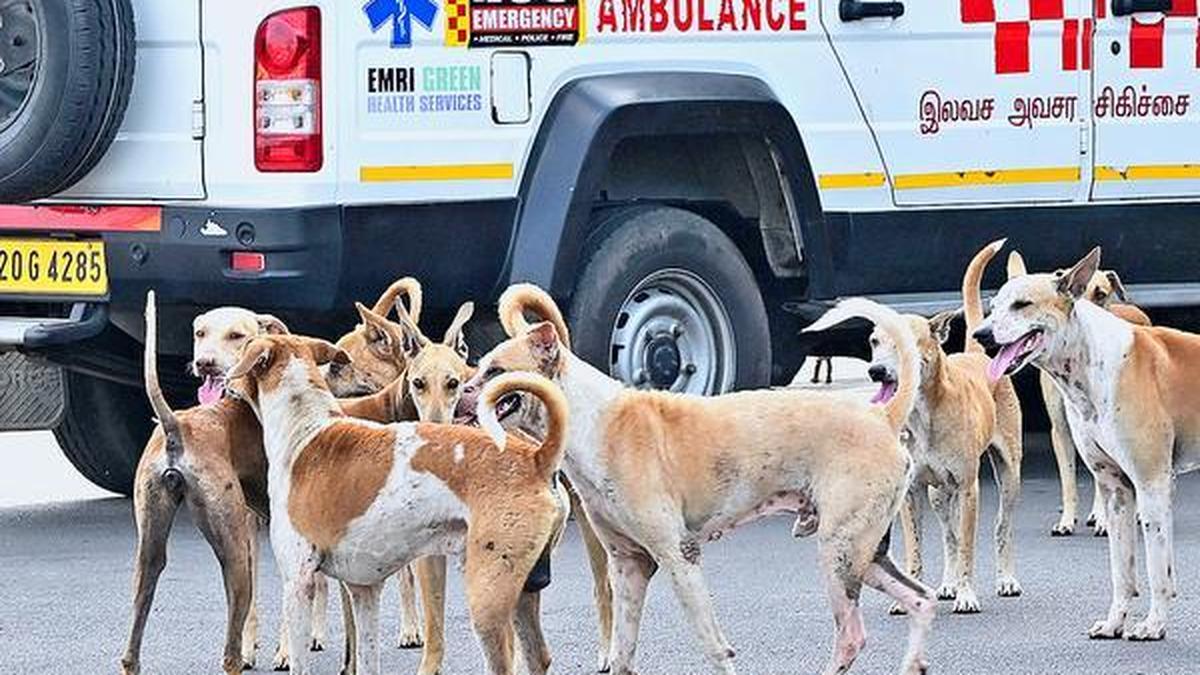
Rabies: The cruel and expensive disease of India’s most impoverished
There is a ward at the government Epidemic Diseases Hospital in Bengaluru from where every single patient is wheeled out dead. The windows are blackened, the room is airless, the only piece of furniture is a solitary cot. This room is not a punitive space: on the contrary, it is refuge for rabies patients who suffer hydrophobia, the fear of light, even of air. Recently, a 50-year-old construction worker from Delhi was brought in after a rabid dog bit him months ago. “He will be dead by tonight,” says Suresh N.V., Bengaluru district surgeon, who is also the medical superintendent of the hospital. This was patient number 17 this year, just in this one hospital. “Some patients can be sedated to stop them from hallucinating and for hyperactivity, but others can get very aggressive,” he says. One patient, the doctor recalls, lay crumpled with fear that the army was out to get him. And yet another suffered for 10 days before he finally died. Death by rabies is frightening, painful, and inexorably cruel. The Indian scenario Of the 59,000 rabies-mediated human deaths in the world every year, India represents a third, around 20,000, and more than any other country, according to a paper published in One Health in December 2024. Rabies is endemic to India, with the main reservoir of the virus being dogs, and the poorest, the majority of the patients. Days, weeks or months after a rabid dog bite, if the victim is not vaccinated, death is inevitable. The symptoms begin with paralysis from the feet upwards, typically followed by cardio-respiratory failure that finally strikes the victims down. Rabies is a neurotropic virus, and unlike other pathogens, travels via the peripheral nerves (not blood) to the spinal chord, and then to the brain. Post-exposure prophylaxis (PEP) involves immediately washing the wound under running water with soap for 15 minutes, followed by the anti-rabies vaccination (ARV), rabies immunoglobulin (RIG) and a tetanus shot. Who is at risk? “Human populations inhabiting areas that sustain free-roaming dogs are at the high risk of being bitten,” says Harish Kumar Tiwari, of the Indian Institute of Technology Guwahati, and co-author of the One Health paper, describing rabies as being a disease of the poor and vulnerable. These are usually daily wage workers, often living on the margins of the society: brick kiln workers, waste collectors, rural and remote populations, farming communities. “Besides a lack of awareness of the disease, there is poor accessibility, affordability, and availability of PEP,” he points out. In November 2025, the Supreme Court directed all States to remove stray dogs from hospital premises, educational institutions, railway stations and other spaces of public use and place them in shelters after they are sterilised and vaccinated. Animal rights activists have, ever since the court order, claimed that this prospective programme is “impractical” and “cruel”. According to data available, thereare 80 million free roaming dogs in India and 20 million dog bites per year, making rabies a large public health problem. The...
Preview: ~500 words
Continue reading at Thehindu
Read Full Article