At the edges of the AI data center boom, rural America is up against Silicon Valley billions | Fortune
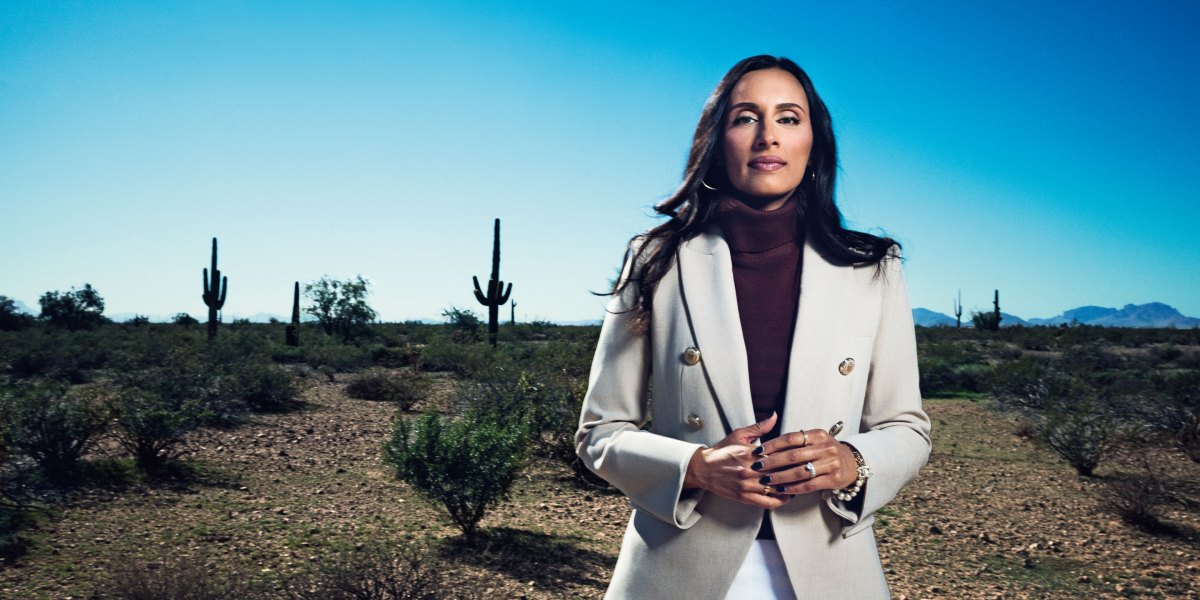
The land around Hassayampa Ranch, 50 miles west of Phoenix, is dotted with saguaro cacti and home to coyotes, jackrabbits, and rattlesnakes. Its few hundred human residents were largely drawn by the tranquility and clear skies for stargazing. But several of the biggest names in Silicon Valley are suddenly very interested in what happens on this serene stretch of desert. The region once dominated by ranches and farmland is becoming a new kind of tech hub-one that’s largely unpeopled, made up of row upon row of humming, energy-hungry GPU racks in gigantic AI data centers. At a weekday morning hearing earlier this month, nearly an hour and a half away in downtown Phoenix, the Maricopa County Board of Supervisors approved an amendment that would allow for the industrial rezoning of a 2,000-acre property at Hassayampa Ranch. The developer, Anita Verma-Lallian, bought this vast tract of desert in May 2025 in a $51 million deal backed by heavyweight tech investors including the billionaire venture capitalist, podcast cohost, and Trump mega-donor Chamath Palihapitiya. The plan? A massive AI data center project that will likely draw a major cloud provider or Big Tech “hyperscaler” such as Meta , Google , or OpenAI. “We have probably six to eight large hyperscalers that are interested in looking at it,” Verma-Lallian told Fortune . In a crisp gray jacket and narrow black slacks, with a chartreuse clutch in hand, Verma-Lallian emerged victorious from the supervisors’ auditorium into the midmorning desert light. She and her team-including her lawyer, real estate agent, PR rep, personal assistant, and sister-grinned in a group photo to mark the moment. For this 43-year-old daughter of Indian immigrants raised in Scottsdale, the vote represented yet another milestone in her family’s American success story. Her father, Kuldip Verma, founded Vermaland-now one of Arizona’s major land and real estate companies-back in the mid-1990s, and Verma-Lallian has built a profile in her own right as a land developer with decades in the business. The Hassayampa Ranch deal, along with another 2,069-acre land parcel in nearby Buckeye that she sold in August for $136 million, has positioned her as a rising force in Arizona’s AI infrastructure race. The crucial and unanimous Dec. 10 decision on Hassayampa Ranch means that Verma-Lallian can now submit a detailed zoning application and site plans. The giant data center will feature outsize buildings filled with aisles of GPU server racks, round-the-clock cooling systems, and 1.5 gigawatts of power-equivalent to the power needs of over a million homes. It will cost as much as $25 billion to build, Verma-Lallian and Palihapitiya have said. It’s a familiar story across the country: These mega-scale data center projects, providing the computing power underpinning the AI boom and the U.S. race against China to dominate the sector, are changing landscapes, straining energy grids and water tables, and reshaping the economy. And those hyperscalers-including Alphabet, Amazon , and Meta, as well as fast-growing AI companies such as OpenAI and Anthropic-are spending hundreds of billions a year to build...
Preview: ~500 words
Continue reading at Fortune
Read Full Article