Why Farmers Cover Their Bodies In Burnt Motor Oil Before Harvesting This Winter Crop
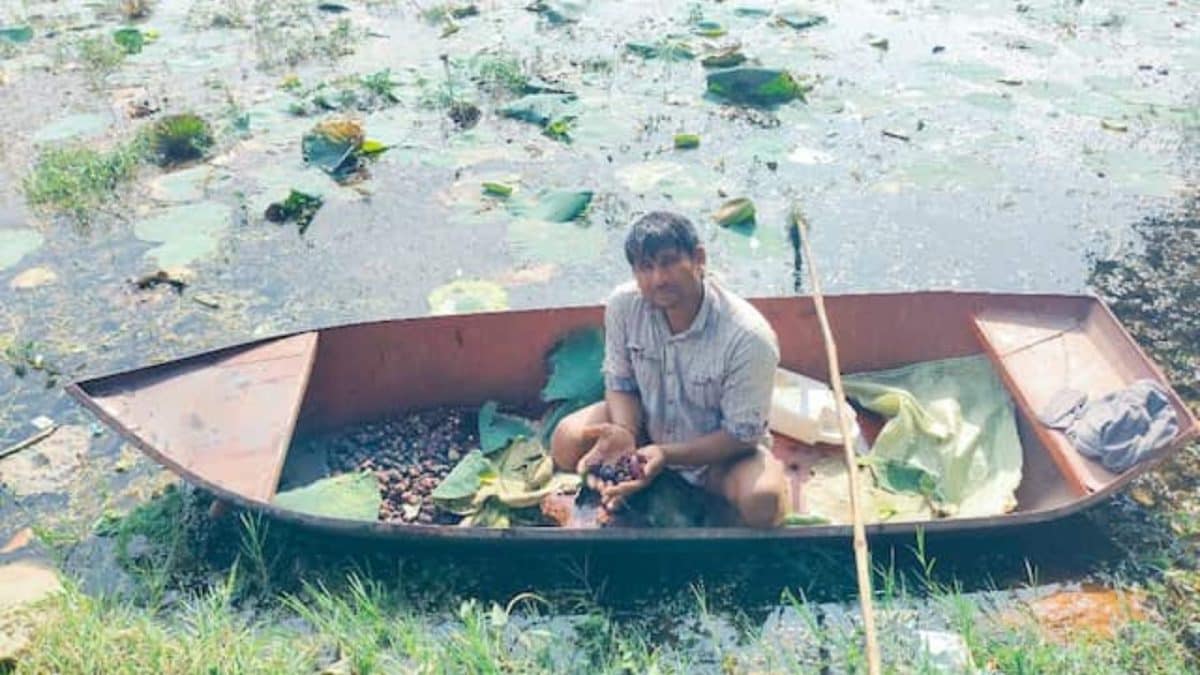
Why Farmers Cover Their Bodies In Burnt Motor Oil Before Harvesting This Winter Crop Farmers spend months submerged in stagnant water, risking disease, snakes and ruin, just so that this famous winter vegetable can reach the market Share Your Feedback + Follow usOn Google As winter sets in, heaps of fresh water chestnuts, known famously as singhara , quietly arrive in local markets with their glossy shells signalling the season. They are eaten as a vegetable, boiled for snacks, or relished for their crunch. What rarely reaches the consumer, however, is the story of the people who grow them, a story marked by months spent waist-deep in water, constant danger, and a livelihood earned at personal risk. In Chhatarpur, water chestnut farming is not just labour-intensive; it is physically punishing. For Jayswaroop, a farmer who has been cultivating the crop for the past three years, the work begins long before the produce reaches the market. Each day, for months at a stretch, he enters stagnant ponds to tend to the crop, a task that exposes him to poisonous crabs, snakes and severe skin infections. Recommended Stories Before stepping into the water, Jayswaroop coats his body with burnt lubricant oil. It is not a one-day precaution but a daily ritual that lasts the entire farming season. The oil, sourced free from nearby areas, acts as his only protection against rashes, itching and skin rot. Medicines are expensive, he says, and beyond his reach. Without the oil, even his fingers begin to decay from constant exposure to water. The crop itself takes about three months to mature. Once the vines begin to fruit, they continue producing for nearly two months. Each vine yields 6-8 water chestnuts at a time, and after harvesting, the same vine bears fruit again. Over the season, a single vine can produce up to 14 or 15 chestnuts. The returns, Jayswaroop says, are decent when conditions are favourable and the market responds well. This year, however, nature dealt a blow. Jayswaroop planted water chestnuts on two bighas of land, but heavy rainfall washed away nearly half the crop. The losses will cut deeply into his earnings, leaving little reward for months of hazardous work. Despite the risks, Jayswaroop believes water chestnut farming is open to anyone willing to learn. But he is quick to add that it demands stamina, patience and the courage to face uncertainty every day. Click here to add News18 as your preferred news source on Google. Latest India News along with detailed National Updates . Explore the latest updates on World News , Politics , City News , Explainers , and Expert Opinion . Follow News18 on Google . Join the fun, play games on News18 . Download the News18 App to stay updated! Terms of Use and Privacy Policy .
Preview: ~467 words
Continue reading at News18
Read Full Article