Third Palestine Action hunger striker on remand ends protest
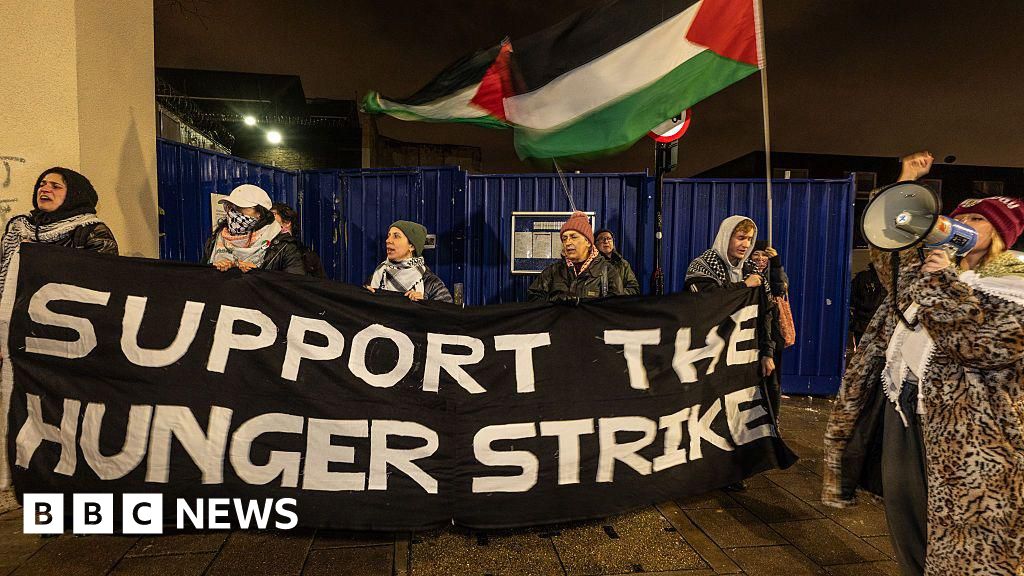
Third Palestine Action hunger striker on remand ends protest A third remand detainee awaiting trial for alleged offences relating to the Palestine Action group has stopped a lengthy hunger strike, according to a letter sent to the government. Supporters of Palestine Action hunger strikers protested outside Pentonville prison last Thursday The letter confirms that Qesser Zuhrah, the joint-first of eight to begin the hunger strike on 2 November, had ended her protest after 48 days. Lawyers for the group have given ministers until Tuesday afternoon to respond to a threat to go to the High Court over a refusal to hold talks. A Ministry of Justice (MoJ) spokesperson said: "We want these prisoners to accept support and get better, and we will not create perverse incentives that would encourage more people to put themselves at risk through hunger strikes." Three of the eight individuals participating in the protest have stopped while four are said to be still taking part. The eighth member of the group is now described by supporters as intermittently refusing to eat because of an underlying health condition. Ms Zuhrah was taken to hospital last week amid protests outside HMP Bronzefield claiming that she was being denied full medical assistance. MoJ officials have previously disputed claims of mistreatment. The Ministry does not comment publicly on the specific management of individuals. Amy Gardiner-Gibson, who also goes by the name Amu Gib and began a hunger strike on the same day as Ms Zuhrah, was reportedly transferred to hospital on Sunday on the 50th day of the protest. The other remaining hunger strikers are Heba Muraisi, Teuta Hoxha and Kamran Ahmad. They are said to have been refusing food for 49 days, 43 days and 42 days respectively - accounts that have not been disputed by officials. Prison and NHS guidelines make clear that clinicians must oversee treatment decisions for hunger strikers. They can only be given food-related treatments if they consent or it is clear they lack the mental capacity to choose. In a detailed legal warning letter, lawyers for the group say they will ask the High Court to review Justice Secretary David Lammy's refusal to meet with their representatives if they do not receive a reply by 14:00 GMT on Tuesday. The group's lawyers say that prison service policies make clear that staff "must make every effort" to understand why a prisoner is refusing food and address the reasons. The group has called for the ban on Palestine Action to be lifted . The High Court has been reviewing the home secretary's decision to proscribe the group and a judgment is expected in the New Year. The protesters allege they have been treated unfairly and not bailed ahead of trials in 2026 and 2027. Some of these cases cannot be reported at this stage under standard laws designed to ensure a fair trial of all criminal suspects. "Our clients' food refusal constitutes the largest co-ordinated hunger strike in British history since 1981," says the letter in...
Preview: ~500 words
Continue reading at Co
Read Full Article