How systemic failures turn state mental hospitals into prisons
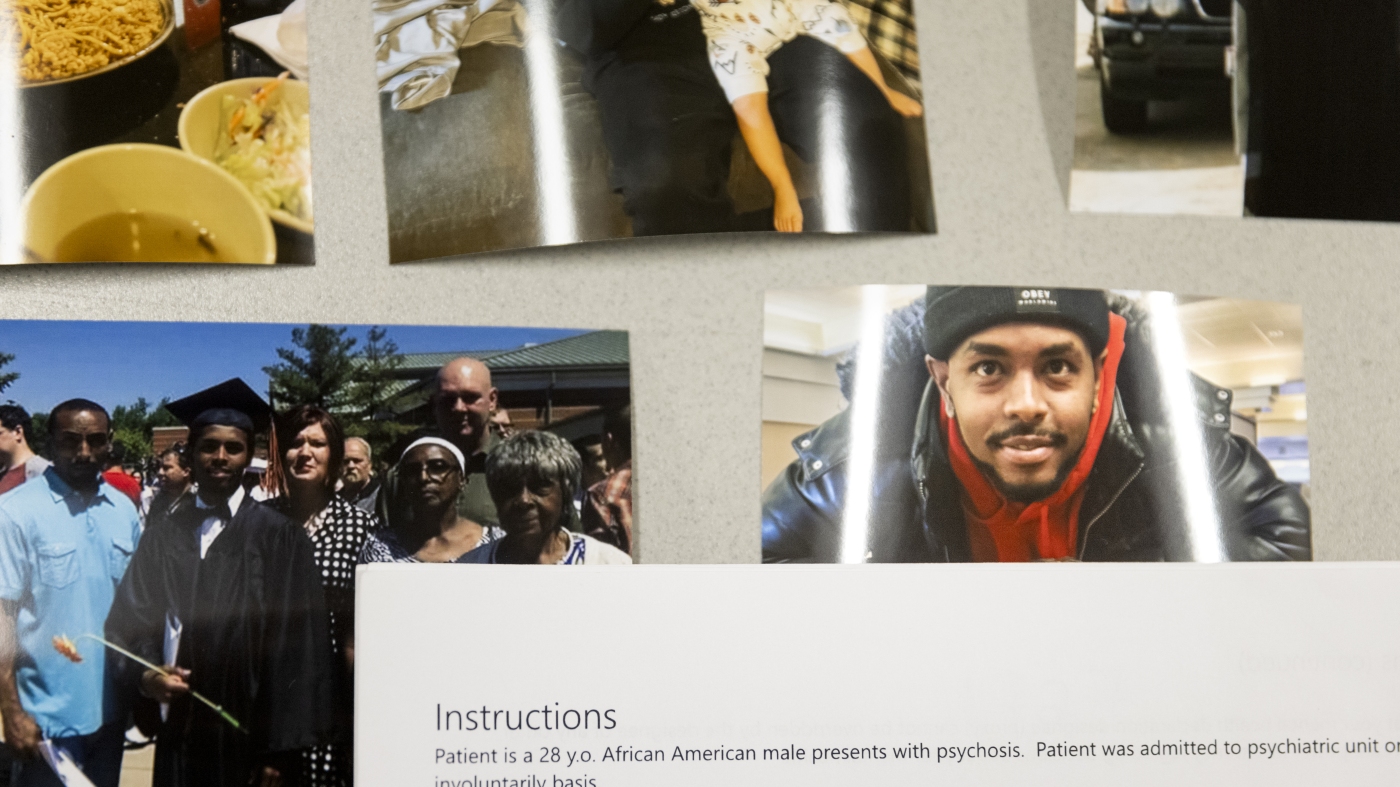
How systemic failures turn state mental hospitals into prisons Family photos and hospital records of Quincy Jackson III, gathered by his mother, Tyeesha Ferguson. The mental health system makes it "easier to criminalize somebody than to get them help," she says. "He's not a throwaway child." Meg Vogel for The Marshall Project and KFF Health News hide caption toggle caption SPRINGFIELD, Ohio - Tyeesha Ferguson fears her 28-year-old son will kill or be killed. "That's what I'm trying to avoid," said Ferguson, who still calls Quincy Jackson III her baby. She remembers a boy who dressed himself in three-piece suits, donated his allowance, and graduated high school at 16 with an academic scholarship and plans to join the military or start a business. Instead, Ferguson watched as her once bright-eyed, handsome son sank into disheveled psychosis, bouncing between family members' homes, homeless shelters, jails, clinics, emergency rooms and Ohio's regional psychiatric hospitals. Over the past year, The Marshall Project - Cleveland and KFF Health News interviewed Jackson, other patients and families, current and former state hospital employees, advocates, lawyers, judges, jail administrators, and national behavioral health experts. All echoed Ferguson, who said the mental health system makes it "easier to criminalize somebody than to get them help." Tyeesha Ferguson has been trying to get mental health care for her son, Quincy Jackson III, for most of his adult life. He has cycled in and out of hospitals and jails for about a decade. Meg Vogel for The Marshall Project and KFF Health News hide caption toggle caption State psychiatric hospitals nationwide have largely lost the ability to treat patients before their mental health deteriorates and they are charged with crimes. Driving the problem is a meteoric rise in the share of patients with criminal cases who stay significantly longer, generally by court order. Patients wait or are turned away Across the nation, psychiatric hospitals are short-staffed and consistently turn away patients or leave them waiting with few or no treatment options. Those who do receive beds are often sent there by court order after serious criminal offenses. In Ohio, the share of state hospital patients with criminal charges jumped from about half in 2002 to around 90% today . The surge has coincided with a steep decline in total state psychiatric hospital patients served, down 50% in Ohio in the past decade, from 6,809 to 3,421, according to the U.S. Substance Abuse and Mental Health Services Administration . During that time, total patients served nationwide dropped about 17%, from 139,434 to 116,320, with state approaches varying widely, from adding community services and building more beds to closing hospitals. Ohio Department of Behavioral Health officials declined multiple interview requests for this article. The decline in capacity at state facilities unfurled as a spate of local hospitals across the country shuttered their psychiatric units, which disproportionately serve patients with Medicaid or who are uninsured. And the financial stability of local hospital mental health services is likely to deteriorate further after Congress passed...
Preview: ~500 words
Continue reading at Npr
Read Full Article